

What Questions Do People Ask Most About Solar Street Lights?
May 22, 2026
Leave a message
As cities, governments, contractors, and commercial developers continue searching for sustainable and cost-effective lighting solutions, solar street lights have become one of the fastest-growing choices for outdoor infrastructure projects around the world. From highways and municipal roads to industrial parks, residential communities, parking lots, and remote villages, solar-powered lighting systems are now widely recognized as an efficient alternative to traditional street lights. However, before purchasing solar street lights, many customers still ask the same important questions: Are solar street lights reliable? Can they work during rainy days? How long do they last? Are they really worth the investment?
The answer is yes. Modern solar street lighting technology has developed rapidly over the past decade, making today's systems far more efficient, durable, and intelligent than earlier generations. High-quality solar street lights use advanced PERC or TOPCon monocrystalline solar panels with conversion efficiency exceeding 23%, allowing them to generate more electricity even in limited sunlight conditions. During the daytime, the solar panels absorb sunlight and convert solar energy into electricity, which is then stored in high-performance lithium batteries. At night, intelligent controllers automatically power the LED lighting system without requiring manual operation or grid electricity.
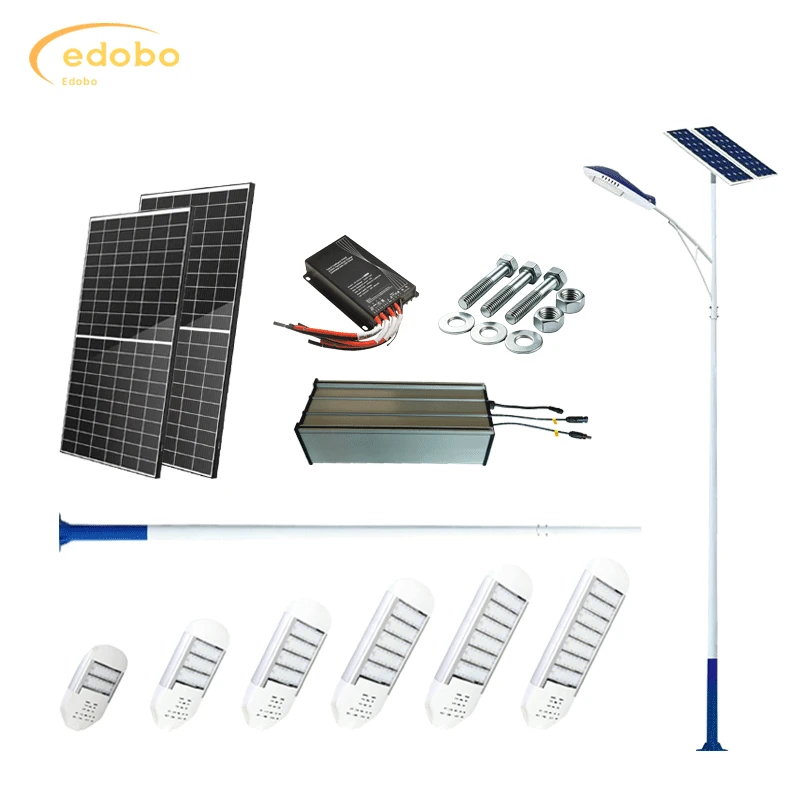
One of the biggest concerns customers have is whether solar street lights can continue working during cloudy or rainy weather. In fact, professional solar lighting systems are specifically designed for harsh outdoor environments. High-capacity LiFePO4 lithium batteries combined with intelligent MPPT charging controllers allow the systems to maintain stable operation even after several consecutive rainy days. Compared with traditional PWM controllers, MPPT technology significantly improves charging efficiency and energy utilization, especially during weak sunlight conditions. Many commercial-grade solar street lights can continue operating for three to seven days without direct sunlight, making them highly suitable for highways, coastal roads, public parks, and remote off-grid areas.
Durability is another major reason why more global projects are choosing solar street lights. Premium systems are engineered with aluminum alloy lamp housings that provide excellent heat dissipation while protecting internal components from rain, dust, and high temperatures. Most high-quality products achieve IP66 waterproof protection standards and pass rigorous environmental tests including salt spray resistance, humidity testing, and extreme weather simulations. The lamp poles are usually manufactured from Q235 steel with hot-dip galvanizing treatment and outdoor anti-corrosion coating, ensuring long-term stability even in coastal regions with high salt exposure.
Another frequently discussed topic is battery lifespan. Traditional lead-acid batteries require regular maintenance and have relatively short service life, while LiFePO4 lithium batteries have become the preferred solution for modern solar street lighting systems. These batteries can exceed 3000 charge-discharge cycles, offer stable performance under high temperatures, and support intelligent BMS battery management systems for overcharge and over-discharge protection. Combined with high-brightness LED chips reaching up to 200 lumens per watt, modern solar street lights can deliver reliable illumination while significantly reducing maintenance costs over time.
For many buyers, installation cost is also an important factor. One of the greatest advantages of solar street lights is that they do not require complicated underground wiring or expensive electrical infrastructure. This greatly reduces labor costs and installation time, especially for remote areas where grid electricity is unavailable or costly to deploy. In addition, solar street lights eliminate electricity bills completely, allowing governments and commercial operators to save substantial operational expenses over the long term while also reducing carbon emissions and supporting environmental sustainability goals.
As global demand for renewable energy solutions continues to increase, customers are paying more attention to product certifications and quality standards. Reliable solar street light manufacturers should provide products that comply with international certifications such as CB, CE, EMC, LVD, and ENEC/ENEC+ standards. These certifications ensure product safety, electrical reliability, waterproof performance, and long-term outdoor durability. At the same time, professional suppliers should also provide comprehensive after-sales support including installation guidance, technical training, remote diagnostics, and long-term warranty service.
Today, solar street lights are no longer simply an alternative lighting option; they are becoming the future standard for outdoor infrastructure projects. With advantages such as zero electricity cost, intelligent control systems, long service life, easy installation, and environmentally friendly performance, solar street lighting solutions are now widely adopted across municipal engineering, transportation projects, industrial developments, and rural electrification programs worldwide. For buyers looking for a reliable and cost-effective lighting investment, choosing a high-quality solar street light system is not only a smart economic decision, but also an important step toward a cleaner and more sustainable future.
Looking for a trusted solar street light supplier for your next project? Explore our latest solar lighting solutions on Made-in-China, including products for highways, municipal roads, industrial parks, residential communities, and off-grid applications. Visit our Made-in-China store today to learn more about our products, technical capabilities, and project support services.
Share