

How Does A Solar Air Conditioner Work?
Aug 20, 2026
Leave a message
How Does A Solar Air Conditioner Work?
Introduction
With increasing electricity costs and growing interest in renewable energy, solar air conditioners are becoming a practical cooling solution for homes, businesses, and off-grid applications.
Unlike traditional air conditioners that rely completely on grid electricity, solar air conditioners use solar energy as the main power source. By combining solar panels, battery storage, and backup power options, these systems can provide a more flexible and reliable cooling experience.
Understanding how a solar air conditioner works can help users better understand the system design and choose a suitable cooling solution according to their actual needs.
How Does A Solar Air Conditioner Generate Power?
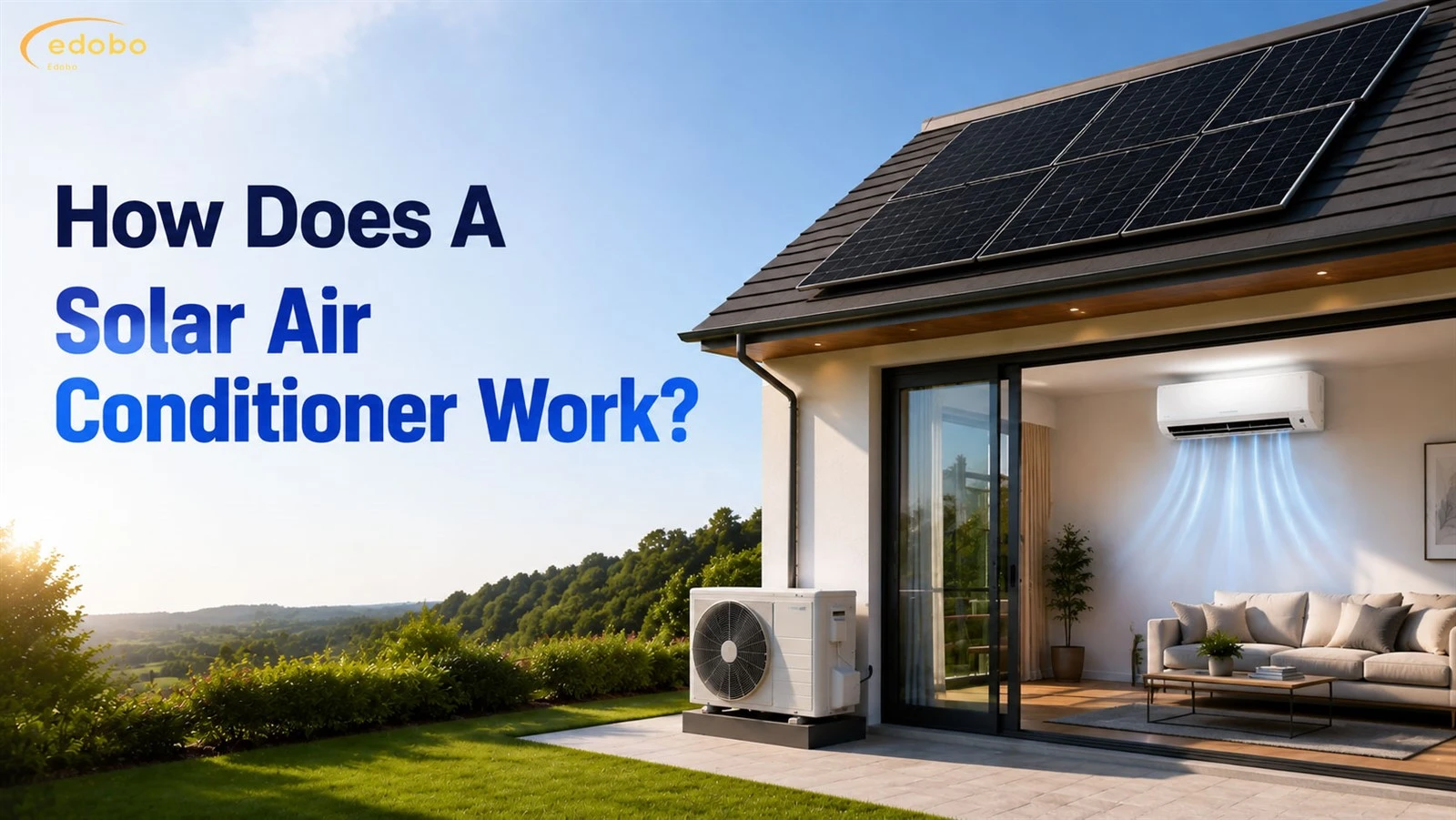
The working process of a solar air conditioner starts with solar panels. During the daytime, solar panels capture sunlight and convert it into electricity to support the operation of the air conditioner.
For a DC solar air conditioning system, the solar energy generated by the panels can directly supply power to the air conditioner while also charging the battery at the same time. This allows the system to make better use of available solar energy instead of wasting excess power.
The solar panel configuration required depends on several factors, including the air conditioner capacity, local sunlight conditions, installation environment, and daily cooling requirements. A properly designed solar system helps ensure stable operation under different conditions.
How Does A Solar Air Conditioner Work When There Is No Sunlight?
One of the most common questions about solar air conditioners is whether they can continue working when sunlight is unavailable.
Since solar panels only generate electricity when exposed to sunlight, the system needs additional power sources during nighttime or periods of weak sunlight.
With battery storage, the energy collected during the daytime can be stored and used to power the air conditioner when solar energy is not available. For users who require continuous cooling, grid electricity can also be used as a backup power source.
This combination of solar power, battery storage, and grid backup allows solar air conditioners to provide more stable cooling performance in different environments.
What Makes A Solar Air Conditioner Different From A Traditional Air Conditioner?
The biggest difference between solar air conditioners and traditional air conditioners is the power supply method.
Traditional air conditioners mainly depend on electricity from the grid, while solar air conditioners can use renewable solar energy as the primary power source. This makes them especially suitable for areas with high electricity costs, unstable power supply, or limited access to the grid.
In addition, many solar air conditioners use DC inverter technology, which helps improve energy efficiency by adjusting power consumption according to cooling demand.
Where Can Solar Air Conditioners Be Used?
Solar air conditioners are suitable for various applications where reliable and energy-efficient cooling is needed.
For residential users, solar air conditioners can help reduce electricity consumption while providing comfortable indoor temperatures. For villas, farms, remote buildings, and off-grid locations, solar cooling solutions can provide an alternative option where traditional power infrastructure may be limited.
They can also be used in commercial applications where reducing energy costs and improving energy independence are important considerations.
How To Choose The Right Solar Air Conditioner?
Choosing a suitable solar air conditioner requires considering the cooling capacity, solar panel configuration, battery requirements, and local environment.
A larger cooling capacity usually requires a higher solar input to maintain stable operation. For example, different BTU models need different recommended solar panel configurations to match their power requirements.
However, the actual system design should also consider sunlight conditions, weather patterns, and daily operating time to achieve the best performance.
Conclusion
A solar air conditioner works by converting sunlight into electricity through solar panels. During the daytime, solar energy can directly power the air conditioner while charging the battery at the same time. When sunlight is unavailable, the system can continue operating through battery power or grid backup.
By combining solar power generation, energy storage, and flexible power supply options, solar air conditioners provide a reliable and sustainable cooling solution for modern energy needs.
If you are looking for a solar cooling solution, explore Edobo solar air conditioners to find a suitable option for different residential, commercial, and off-grid applications.