

Indonesia’s $185B Power Overhaul: 42.6GW Renewable Push Faces Land And Execution Hurdles
Jun 05, 2025
Leave a message
The Indonesian government has formally enacted the 2025-2034 Electricity Supply Business Plan (RUPTL), charting a course to add 69.5 gigawatts (GW) of new power generation capacity over the coming decade. Renewable energy sources will drive 61% (42.6 GW) of this expansion, with solar photovoltaics alone accounting for 17.1 GW.
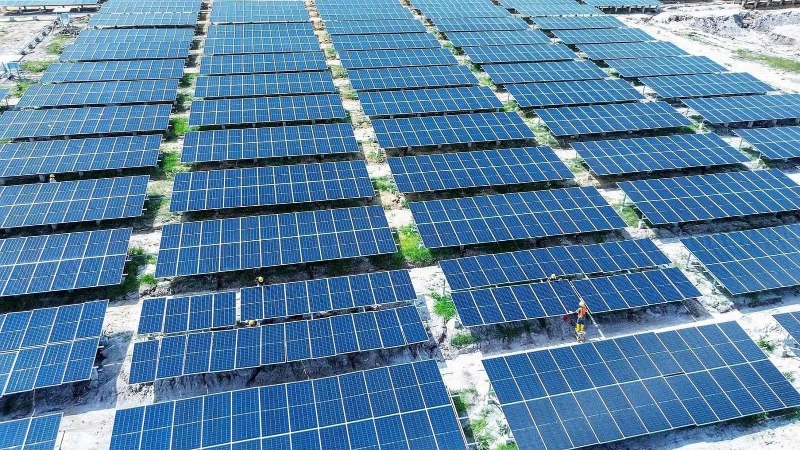
Current data from the International Renewable Energy Agency (IRENA) reveals Indonesia's operational renewable capacity reached just 14.3 GW by end-2024, including a modest 815 MW from solar installations.
Phased Implementation Strategy
Energy Minister Bahlil Lahadalia confirmed the state-owned utility PTPLN will execute the plan in two distinct phases:
Phase 1 (2025–2029): Deployment of 9.2 GW natural gas plants, 12.2 GW from new renewables (categorized as EnergiBaru Terbarukan - including solar, wind, nuclear, hydro, and biomass), 3 GW of energy storage systems (batteries/pumped hydro), and 3.5 GW coal-fired capacity.
Phase 2 (2030–2034): Priority shifts to renewables: 17.1 GW solar PV, 7.2 GW wind, 5.2 GW geothermal, 11.7 GW hydropower, 0.9 GW biomass, plus two 250-MW nuclear reactors.
Minister Lahadalia reiterated Indonesia's Paris Agreement commitments and confirmed the 2060 net-zero emissions target.
Investment & Infrastructure Scale
The decade-long initiative requires $185.5 billion (IDR 29674 trillion) in investments. Independent Power Producers (IPPs) will lead 73% of projects, with PTPLN Group managing the remainder. Supporting infrastructure includes:
48,000 km of new transmission lines
108,000 MVA substation capacity expansion
Implementation Challenges
While floating solar projects are planned to utilize Indonesia's water resources (20% deemed suitable for PV), international law firm A&O Shearman cautioned that land acquisition remains a critical hurdle for utility-scale solar, typically requiring 1 hectare per MW.
Media criticism has emerged, with The Jakarta Post editorializing that RUPTL's initial fossil-fuel dependence risks making it a "missed opportunity" for sustainable development, citing concerns about execution timelines and renewable transition delays.