

Just Now! Trump Wins, Photovoltaic Changes?
Nov 07, 2024
Leave a message
On November 5th, US time, the 60th presidential election officially voted, with Democratic candidate and current Vice President Kamala Harris and Republican candidate and former President Donald Trump.
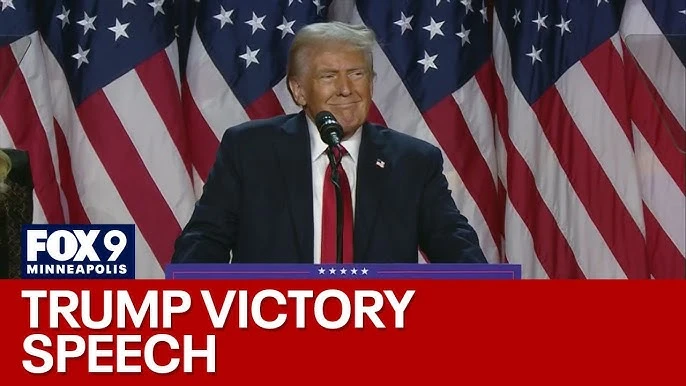
The latest news is that Trump has announced his victory, ultimately winning 277 votes.
The US presidential election is not only an important event in US domestic affairs, but also has a profound impact on the global economy and various industries. As the world's largest energy market, the US election will have a significant impact on the energy sector, especially the clean energy industry.
From past campaign speeches, it can be seen that Trump and Harris have completely opposite attitudes towards developing clean energy.
Harris' tariff policy is relatively mild, emphasizing support for clean energy and promoting large-scale investment in the renewable energy sector.
Trump has always been a supporter of traditional energy sources such as fossil fuels. Compared to Harris, Trump's policies are more radical, advocating for high tariffs on Chinese goods, emphasizing "America First," promoting the return of manufacturing, and reducing dependence on foreign imports.
Some analysts believe that Trump's victory may restart high tariffs on Chinese photovoltaic products, such as the "double anti-dumping" tariffs (anti-dumping and countervailing duties), which will further compress the profit margins of Chinese photovoltaic companies and may lead to a significant reduction in market share.
In fact, during this election period, Trump has repeatedly emphasized the need to expand oil and gas extraction, cancel clean energy policies, including the repeal of the Inflation Reduction Act (IRA), recover unused funds, and promise to declare a national energy emergency after being elected, increase oil and gas production in the United States, and achieve a significant increase in domestic energy supply.
At the same time, Trump plans to continue wielding the "big stick" of tariffs and has stated that if he is elected president, he will immediately impose new tariffs of up to 60% to 100% on Chinese goods. Under this proposition, it can be predicted that if Trump takes office and puts his ideas into practice, the vision of achieving 100% clean energy and net zero emissions by 2050 will become a mirage.
In a debate on September 10th, Trump accused Harris of "the demise of fossil fuels" if elected, and then he made a shocking statement: "I am a loyal fan of solar energy. Contradictory language inevitably raises doubts. We can find the answer to the truth from Trump's first term.
Looking back at Trump's first term, he made multiple moves towards the development of clean energy and increased support for traditional energy. In 2017, Trump announced his withdrawal from the Paris Agreement on climate change, which involved 194 countries, and abolished the Obama administration's Clean Energy Plan, which vigorously developed the new energy industry. He also lifted energy development restrictions in some restricted areas such as the Gulf of New Mexico, giving the green light for traditional energy production such as oil and coal. Under this policy, the United States has become one of the world's largest oil producing countries.
While developing traditional energy, Trump also condemned green and clean energy, and even claimed that global climate change was a "scam". During his tenure, Trump invoked "Section 201" and "Section 301" to impose sky high tariffs on Chinese photovoltaic products imported into the United States.
However, it must be mentioned that during Trump's tenure, the new energy industry in the United States still achieved significant growth, with annual compound annual growth rates (CAGRs) of 19.68%, 9.17%, and 69.74% for wind power, photovoltaics, and energy storage, respectively. In terms of new installed capacity, the annual compound annual growth rates of wind power, photovoltaics, and energy storage during Trump's tenure were 16.01%, 13.85%, and 84.28%, respectively, all exceeding those of the early Biden administration.