

New Research Explores Solar-Powered Refrigeration For Long-Distance Transport
Nov 16, 2026
Leave a message
Solar energy is attracting attention beyond rooftops and stationary refrigeration facilities. A new study published in the journal Renewable Energy explores how photovoltaic panels and battery storage could help power refrigerated containers during long-distance road transport, offering another potential application for renewable energy in the cold chain industry.
Integrating Solar Panels into Refrigerated Containers
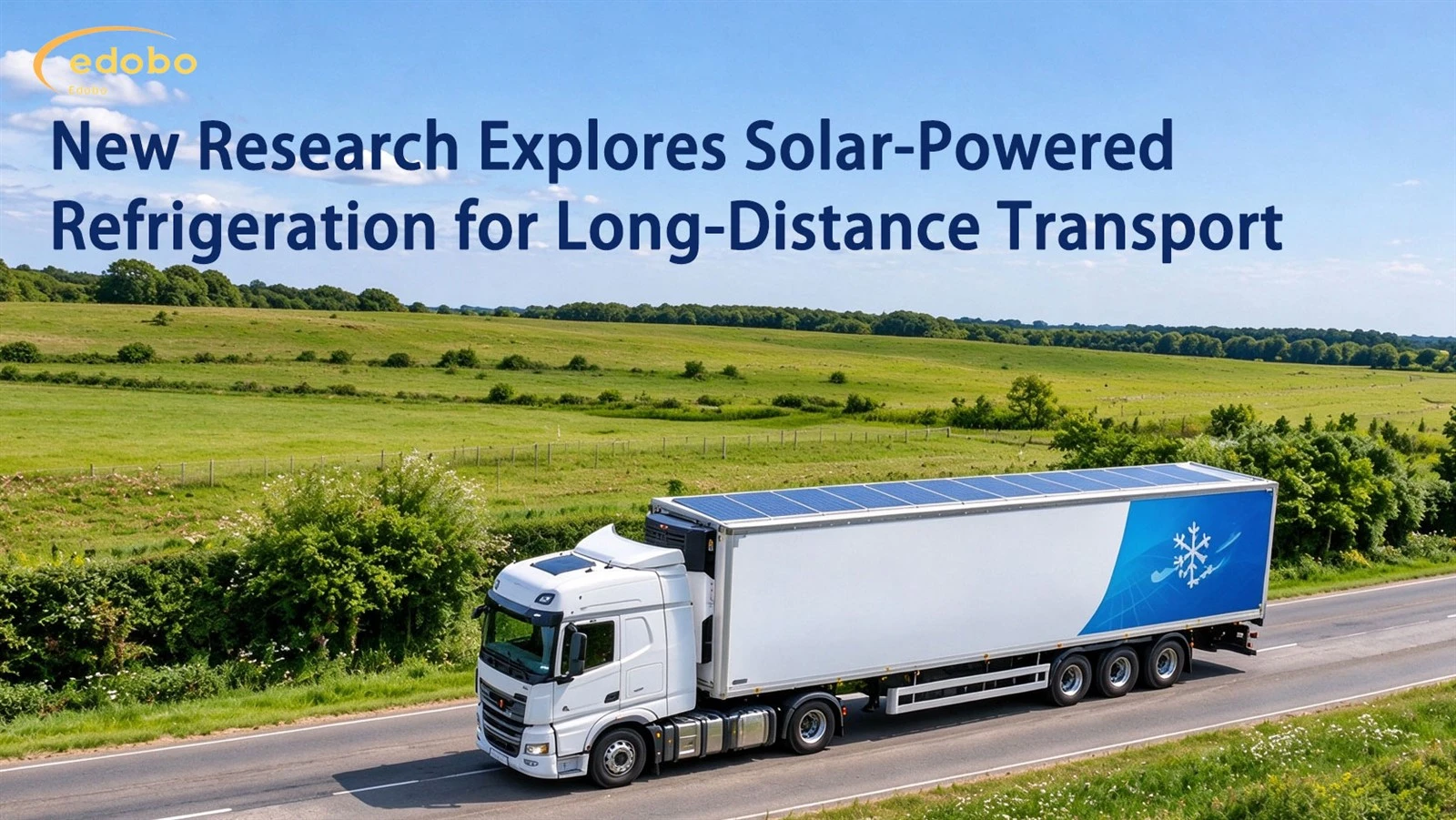
The research, titled Investigation of the Source-Load Characteristics of a PV-Battery-Refrigeration Coupled System for Long-Distance Transportation in Vehicle-Mounted Refrigerated Containers, examines a refrigerated container equipped with photovoltaic panels and a battery storage system.
Unlike conventional refrigerated containers that generally rely on vehicle-powered or diesel-driven refrigeration equipment, the proposed design uses solar electricity as an additional energy source for the cooling system.
The researchers installed photovoltaic modules on the roof and both sidewalls of a standard 40-foot refrigerated container. A battery was included to store electricity and supply the refrigeration unit when solar generation was insufficient.
The study also highlights the importance of thermal insulation. Improving the container's insulation is a key requirement for making better use of the limited solar energy available on a moving vehicle.
What Did the Research Find?
The researchers developed models to evaluate both the container's cooling demand and photovoltaic power generation under changing environmental conditions.
The analysis used a simulated long-distance transportation route between Tianjin and Tongliao in China. Factors such as solar radiation, ambient temperature, vehicle orientation and changing weather conditions were considered when estimating energy production and refrigeration demand.
The results indicate that, under the study's simulated conditions, the photovoltaic system could theoretically generate enough electricity to meet the container's cooling requirements throughout the year on this particular route.
The researchers also estimated that surplus electricity per transportation trip varied from approximately 7.55 kWh to 16.36 kWh across different months. Over an assumed service life of ten years, the system's potential cumulative carbon savings were estimated at around 25.4 metric tons of CO₂.
These figures are research estimates rather than results from a full-scale commercial fleet operating under all weather and transportation conditions. Actual performance would depend on factors such as sunlight availability, route characteristics, insulation quality, refrigeration load and battery capacity.
Why Solar Power Matters for Cold Chain Transportation
Refrigerated transportation requires a continuous supply of electricity to maintain suitable temperatures for food, agricultural products and other temperature-sensitive goods. This energy demand can add to the operating costs and emissions associated with cold chain logistics.
Integrating photovoltaic systems into refrigerated vehicles offers a way to supplement conventional power sources. Battery storage can also help balance the difference between daytime solar generation and the refrigeration system's electricity demand.
However, vehicle-mounted solar systems face practical limitations. Available installation space is restricted, solar exposure changes as vehicles move, and refrigeration demand can vary with outside temperatures and the type of cargo being transported.
This means solar power may be more suitable as part of a combined energy system rather than a universal replacement for existing refrigeration power sources.
The research adds to the growing interest in combining renewable electricity, battery storage and refrigeration technology. It also suggests that improvements in insulation and energy management will be important when adapting solar power to mobile cold chain applications.
As the demand for temperature-controlled transportation continues to grow, vehicle-integrated photovoltaics could become another area worth watching in the development of more energy-efficient cold chain systems.
For more information about solar-powered refrigeration and related products, click here to learn more about solar refrigeration.
Source
Wang, Zhenzhen et al. (2026). Investigation of the source-load characteristics of a PV-battery-refrigeration coupled system for long-distance transportation in vehicle-mounted refrigerated containers. Renewable Energy, Volume 276, Article 126394.
Published: November 15, 2026.
DOI: https://doi.org/10.1016/j.renene.2026.126394