

Solar Freezer Vs Traditional Freezer: Which One Is Better For Modern Cooling Needs?
Jul 16, 2026
Leave a message
Solar Freezer vs Traditional Freezer: Which One Is Better for Modern Cooling Needs?
As energy costs continue to rise and the demand for reliable refrigeration grows in remote areas, more people and businesses are looking for smarter cooling solutions. Traditional freezers have been widely used for decades, but they rely heavily on stable electricity supply and may not be the ideal choice for areas with high energy costs or limited grid access.
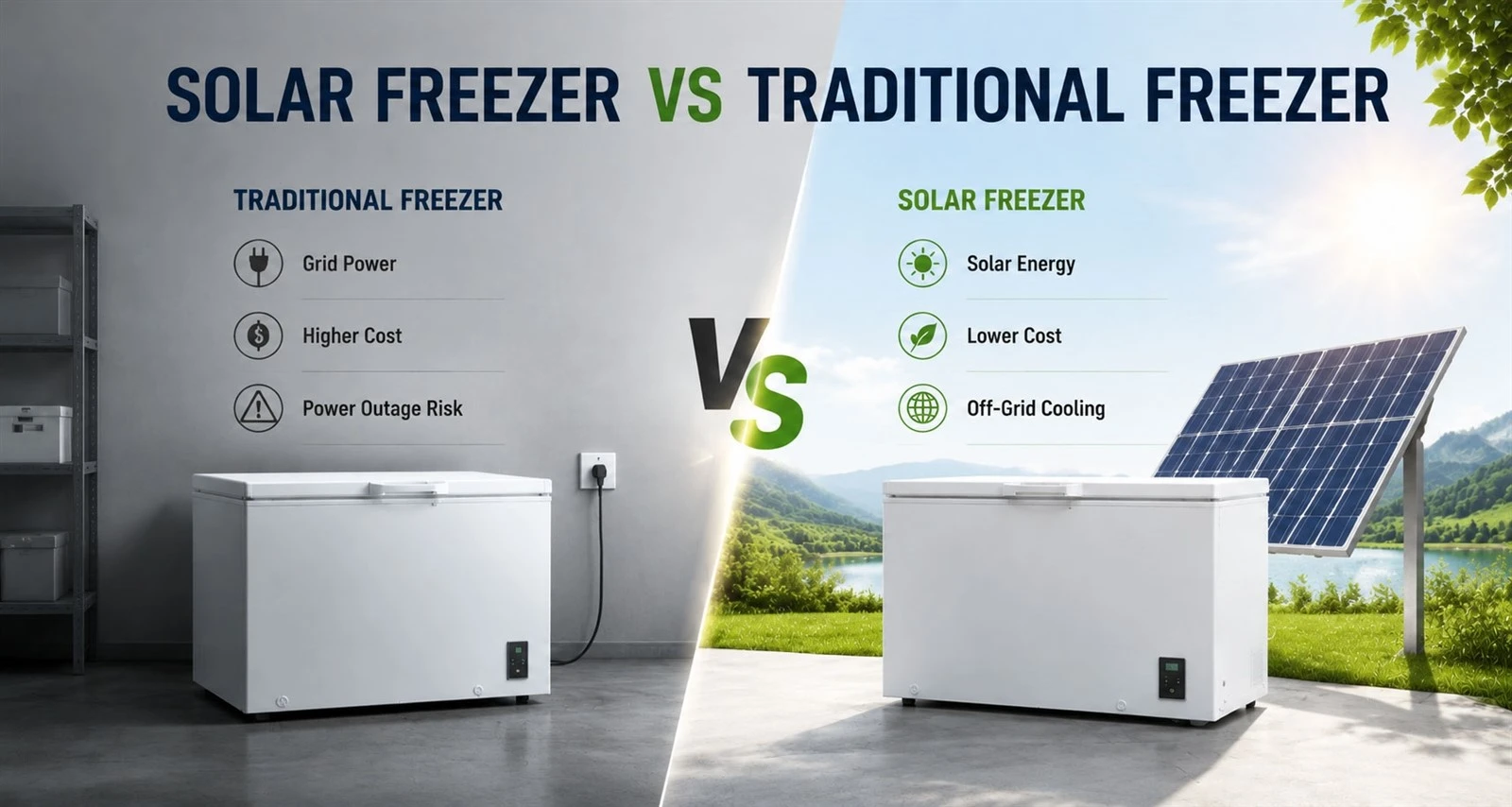
A solar freezer provides a more flexible and sustainable alternative by using solar energy to support refrigeration. Compared with traditional freezers, solar freezers offer significant advantages in energy efficiency, off-grid operation, and long-term operating costs, making them increasingly popular for homes, farms, small businesses, and remote communities.
Traditional freezers require continuous electricity from the grid to maintain low temperatures. In areas with unstable power supply or frequent outages, frozen food and stored products may face the risk of damage. At the same time, the continuous electricity consumption of conventional freezers can create higher operating costs, especially for commercial users who need refrigeration every day.
A solar freezer, however, combines solar power technology with high-efficiency DC refrigeration systems. Solar panels convert sunlight into electricity to power the freezer, while battery storage solutions can help maintain stable operation during periods of insufficient sunlight. This makes solar freezers an excellent choice for off-grid refrigeration applications.
One of the biggest advantages of solar freezers is the ability to reduce electricity costs. Traditional freezers depend entirely on grid power, while solar freezers use renewable solar energy to reduce reliance on conventional electricity sources. For small shops, farms, outdoor businesses, and food suppliers, lowering daily energy expenses can improve long-term operating efficiency.
Another important advantage is reliable cooling in areas without stable electricity. Solar freezers are widely used in rural areas, islands, farms, fishing communities, and remote projects where access to electricity may be limited. By using solar energy, users can maintain reliable food storage and cold chain solutions even in challenging environments.
Compared with traditional freezers, solar chest freezers also provide more flexible application options. They can be used for household food storage, beverage cooling, agricultural products, seafood preservation, and commercial frozen food storage. Different capacity options allow customers to select suitable refrigeration solutions according to their specific requirements.
Energy efficiency is another key factor driving the growth of solar refrigeration technology. Modern solar freezers use high-efficiency DC compressors and low-power cooling systems to provide stable cooling performance while reducing energy consumption. This not only helps save electricity costs but also supports global efforts toward cleaner and more sustainable energy solutions.
As renewable energy technology continues to develop, solar freezers are becoming an important solution for modern refrigeration needs. They provide a practical way to achieve reliable cooling, reduce operating costs, and improve food preservation in areas with limited electricity access.
Edobo provides reliable solar freezer solutions designed for different applications, including home food storage, commercial refrigeration, and off-grid cooling projects. With energy-efficient DC refrigeration technology and multiple capacity options, Edobo helps customers achieve stable and sustainable cold storage solutions.
Interested in reliable and energy-efficient refrigeration solutions? Click here to learn more about Edobo solar freezers, including solar chest freezers designed for home use, commercial food storage, and off-grid applications.
Explore Edobo Solar Freezer Products