

How Do Solar Street Lights Work on Cloudy and Rainy Days?
Apr 15, 2026
Leave a message
People often assume that solar street lights need strong, direct sunlight all day long to work properly. In reality, solar lighting systems are built to capture not just direct sunlight, but also diffused light from cloudy skies. Even when the sun is hidden behind clouds, a certain amount of solar radiation still reaches the ground, and high-quality solar panels can convert that weak light into usable electricity.
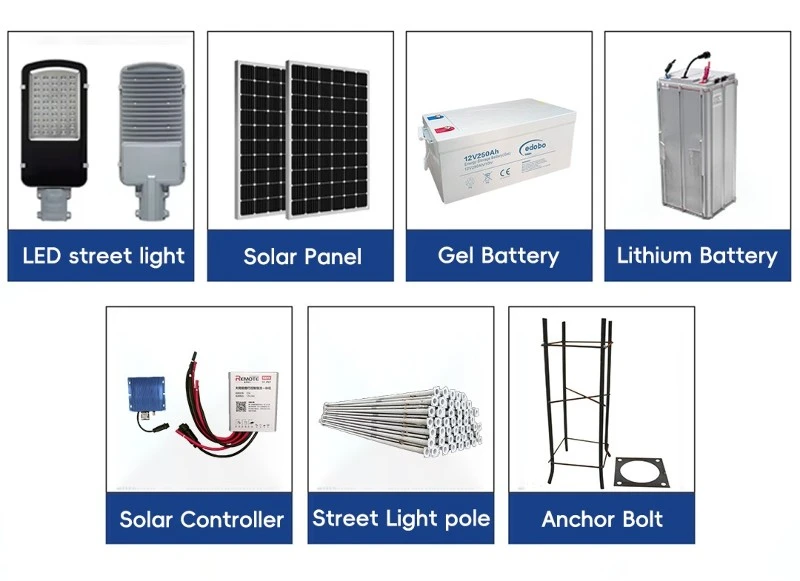
Of course, charging efficiency does drop on cloudy days. Less light means slower charging, and extended rainy periods can further reduce the amount of energy stored. That's why a well-designed solar street light doesn't just depend on good weather-it relies on a balanced combination of efficient solar panels, large enough battery capacity, and intelligent power management. Without reasonable matching, even the best components may struggle to keep the light working all night during long spells of bad weather.
Rain itself usually does not affect the working principle of solar street lights, as long as the product has good waterproof performance. Rainwater cannot enter the sealed lamp body, so the circuit, battery, and controller remain protected. The real challenge comes from continuously weak light over several days. If the panel cannot generate enough power to recharge the battery, the stored energy will gradually decrease, and the light may dim or turn off early.
This is why product design matters so much. High-efficiency monocrystalline solar panels perform significantly better in weak light than low-grade polycrystalline panels. They can capture more light even on overcast days, helping maintain a stable charging speed. A properly sized battery is equally important, as it stores extra energy for cloudy and rainy days, ensuring the light can continue operating for several consecutive bad-weather days.
An intelligent controller also plays a key role in maintaining stable performance. It adjusts power output based on remaining battery level, prevents overcharging and over-discharging, and optimizes energy use throughout the night. Some advanced systems even dim brightness automatically to save power when full brightness is not needed, further extending working time during periods of low charging.
For areas with frequent rain or long cloudy seasons, choosing solar street lights with strong weather adaptability becomes even more critical. Low-quality products often use inefficient panels, small batteries, and simple controllers, making them highly vulnerable to bad weather. Many buyers only discover the problem after installation, when lights fail to stay on during cloudy periods.
In practical projects, the key to reliable solar lighting is not to chase extremely high power or exaggerated parameters, but to choose a system designed for real local weather conditions. A professionally matched system can easily maintain stable lighting for 3 to 5 consecutive cloudy or rainy days, while still recovering quickly once the sun returns.
At Edobo, we fully understand the impact of cloudy and rainy weather on solar street light performance. That's why every product we design is optimized for stable operation in various weather conditions, especially for markets with long rainy seasons and frequent weak light.
Our solar street lights use high-efficiency monocrystalline solar panels with excellent weak-light performance, ensuring effective charging even on cloudy days. Combined with large-capacity, long-cycle lithium batteries and intelligent controllers, our systems can maintain reliable lighting for multiple consecutive bad-weather days. All Edobo products reach IP66 or higher waterproof and dustproof levels, so heavy rain and moisture pose no threat to internal components.
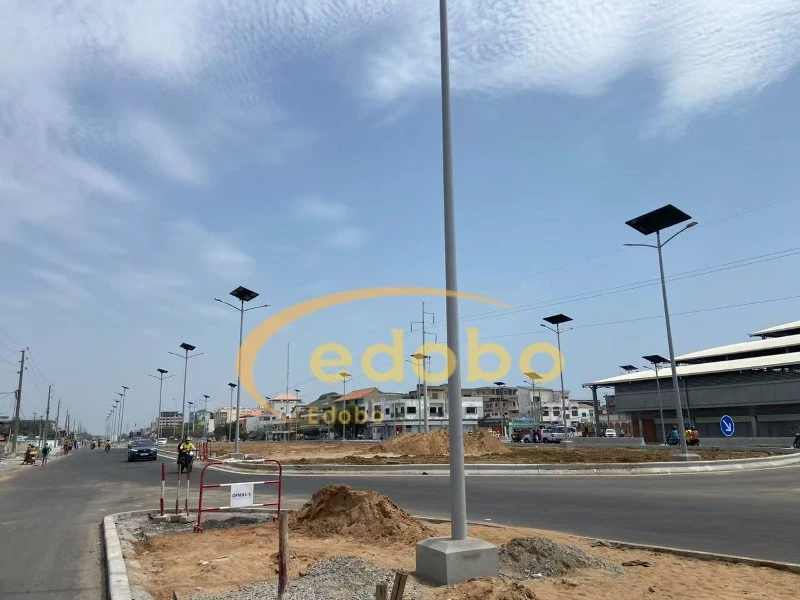
Backed by authoritative certifications including CE LVD, ENEC, ENEC+, and strict C5-M corrosion resistance testing, Edobo solar street lights are built to withstand humidity, rain, and coastal salt spray. Our professional design team also provides customized solutions based on local lighting hours, rainfall patterns, and installation environments, ensuring stable and durable performance in any outdoor condition.
When you choose Edobo, you choose solar lights that work reliably - in sunny days, cloudy days, and rainy days alike.