

Austria's Photovoltaic Installation Volume Drops By 20%
May 22, 2025
Leave a message
Recently, the Austrian Photovoltaic Association (PV Austria) announced that based on preliminary estimates from the industry, Austria's newly installed photovoltaic capacity in the first quarter of 2025 has dropped by approximately 20% compared to the same period in the previous year.
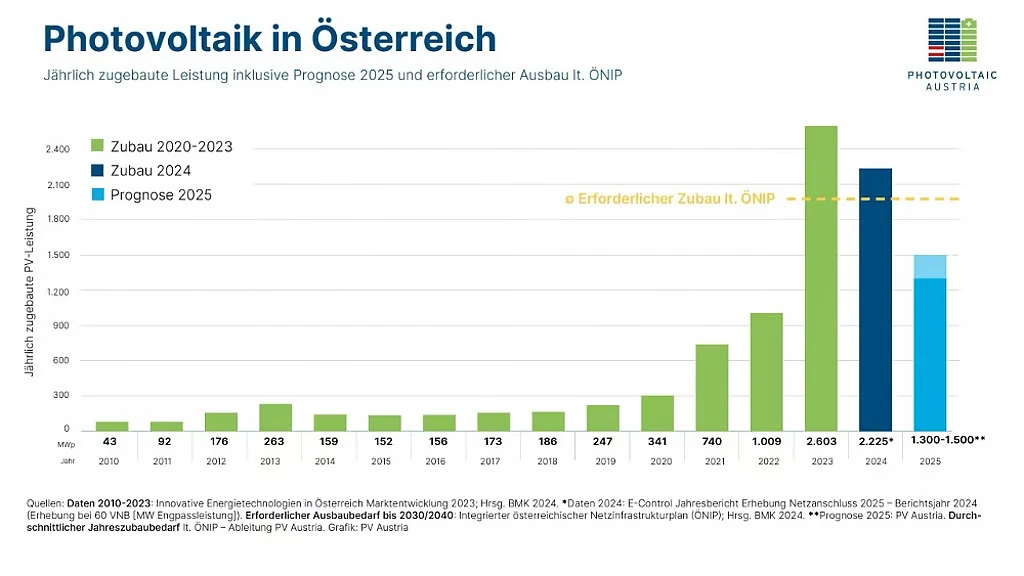
According to a report released by Austria's energy regulator E-Control, Austria added 497 MW of photovoltaic capacity in the first three months of 2024. However, signs of a decline in PV market demand were already evident by the end of that year. For the full year 2024, Austria installed 2.2 GW of new PV capacity, falling short of the nearly 2.5 GW recorded in 2023.
PV Austria stated that the reasons for this negative development are not difficult to identify. Although the current Austrian government has declared more than 20 measures for "affordable energy," its actual policies since taking office have placed pressure on the domestic renewable energy industry. After assuming office in March 2025, the government promptly decided to terminate the VAT exemption for small photovoltaic systems, which was originally intended to remain in effect until the end of the year. According to PV Austria, the government's justification-that it aims to balance the national budget using the tax revenue gained-is based on questionable projections. At the same time, the government extended and further tightened the Energy Crisis Electricity Contributions (EKB), measures that the association says are especially harmful to Austria's medium-sized electricity producers. Additionally, all environmental subsidy programs have been significantly reduced.
Herbert Paierl, CEO of the Austrian Photovoltaic Association, said, "Instead of using the growing renewable energy market to raise additional funds to consolidate budgets, companies have been punished.
The association emphasized the need for the government to pass two essential legislative frameworks-the new Electricity Industry Act (ElWG) and the Renewable Energy Expansion Acceleration Act (EABG). These laws are viewed as critical to the legal framework needed for the energy transition and the delivery of affordable energy. Paierl noted that passing these laws would not require new financial commitments from the national budget but merely the establishment of legal certainty. He stressed that in a situation where the industry is already facing budget cuts and insecurity in incentive programs, the laws should at least be enacted before the summer.