

Canuto: China’s AI & Dual Carbon Push Benefits Global Sustainable Development
Jan 15, 2026
Leave a message
The Central Economic Work Conference held in early December has laid out China's core development blueprint for 2026, focusing on innovation-driven growth, accelerated cultivation of new drivers, deepened expansion of the "Artificial Intelligence+" initiative, and improved AI governance. This aligns with the "15th Five-Year Plan" proposal, which explicitly mandates the full implementation of the "Artificial Intelligence+" action plan over the next five years, marking a strategic push to leverage AI as a cornerstone of high-quality development.
Otaviano Canuto, former Vice President of the World Bank and Senior Researcher at the New South Policy Center, emphasized in a recent interview with Global News that China's advancement of AI technology development and application will not only forge a new "growth pole" for its own economy but also deliver far-reaching benefits to countries worldwide, particularly developing nations.
"Artificial intelligence is the core of building international science and technology innovation centers, as well as key industrial chains such as advanced manufacturing, digital infrastructure, and green technology," Canuto noted. He highlighted that the effective implementation of the "Artificial Intelligence+" initiative, combined with the integration of technological innovation, finance, industrial policies, and governance, will accelerate the formation of new growth poles in China. "China's innovation-driven approach will shape global standards, value chains, and cost structures for digital and intelligent technologies," Canuto added. He stressed that widespread deployment of Chinese AI solutions, hardware, and platforms can reduce the cost of global digital transformation- a boon especially for developing economies- while promoting global trade growth, deepening South-South technological cooperation, and expanding the global supply of AI public goods.
China's AI strategy is backed by clear phased goals outlined in the State Council's "Opinions on Further Implementing the 'Artificial Intelligence+' Action." The plan targets over 70% penetration rate of new-generation intelligent terminals and agents by 2027, a rapid expansion of the core intelligent economy industry scale, and over 90% penetration rate by 2030, solidifying the intelligent economy as a key growth engine. To achieve this, six key actions have been deployed, covering AI integration in science and technology, industrial development, consumption upgrading, people's livelihood, governance capacity, and global cooperation- with a focus on smart connected vehicles, intelligent robots, and smart infrastructure.
Parallel to its AI drive, China is doubling down on green transformation. In September this year, the country announced a new round of nationally determined contributions, proposing for the first time absolute emission reduction targets covering the entire economy and all greenhouse gases- a clear demonstration of its unwavering commitment to addressing climate change. The Central Economic Work Conference further emphasized adhering to the leadership of the "dual carbon" goals (peaking carbon emissions before 2030 and achieving carbon neutrality before 2060) and advancing comprehensive green transformation in 2026.
Canuto recognized that China's push for comprehensive green transformation is not only a vital measure for its own sustainable development but also a significant contribution to global climate action. "China's dual carbon goals have become a core pillar of its development strategy," he stated. Starting in 2026, China will implement a dual control system for total carbon emissions and intensity, with intensity control as the main focus and total control as a supplement- a key part of building a systematic carbon emission control system. Meanwhile, the country will explore more investment opportunities in renewable power grids, energy storage, hydrogen energy, and low-carbon industrial technologies, advancing the construction of a new energy system based on wind, solar, and other non-fossil fuels.
China's dual carbon efforts are critical to advancing the goals of the Paris Agreement. Canuto pointed out that China's growing leadership in clean energy, electric vehicles, batteries, and related supply chains has driven down the cost of global energy transition, making emission reduction more feasible for countries worldwide, especially developing ones. This aligns with China's broader policy framework, which includes integrating carbon emission evaluation into fixed asset investment project reviews, establishing a product carbon footprint management system, and expanding the national carbon trading market to strengthen market-driven emission reduction.
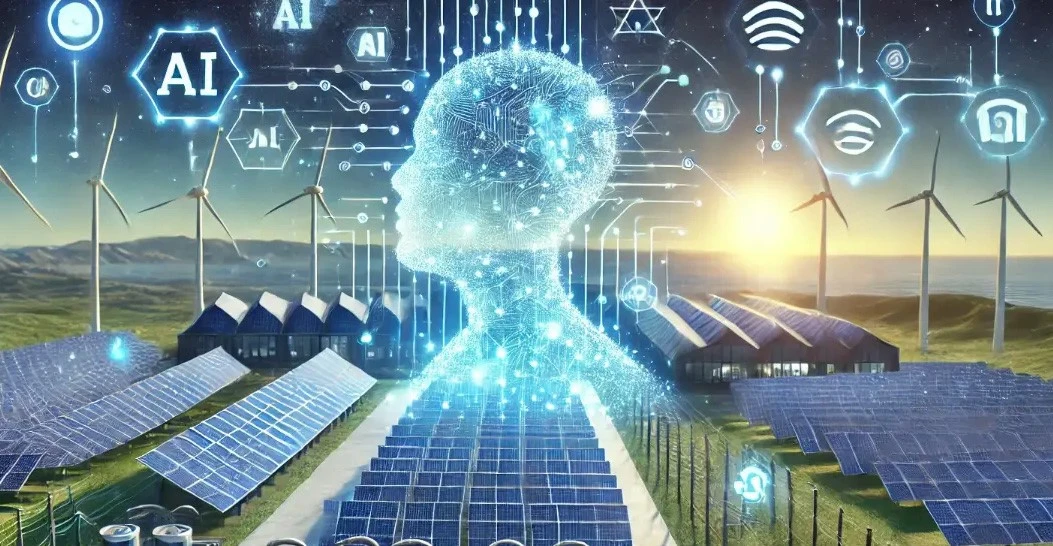
The synergy between AI and dual carbon goals is emerging as a key feature of China's 2026 strategy. AI technologies are being deployed to optimize renewable energy scheduling, improve energy efficiency in industrial processes, and enhance carbon emission monitoring- while the green transformation creates new application scenarios for AI, such as intelligent grid management and low-carbon logistics. This dual-track approach not only fosters new quality productive forces domestically but also offers a model for global sustainable development through South-South cooperation, as seen in Chinese AI solutions empowering agricultural modernization in Pakistan and smart city construction in the UAE.