

Ed Miliband Links Solar Mandate For New Homes To Energy Security Lessons From Iran Conflict
Apr 15, 2026
Leave a message
Recently, the UK has introduced the new Future Homes Standard, requiring all new residential buildings in England to install a specified proportion of solar panels and low-carbon heating systems. The new rule is positioned as a key measure to strengthen resilience against global energy shocks.
Under the Future Homes Standard, new homes built from 2028 onward will be mandated to include renewable electricity generation facilities, the vast majority of which are expected to be solar photovoltaic systems. In addition, the regulation requires new housing to adopt low-carbon heating solutions such as heat pumps and district heating networks.
To accelerate progress toward this goal, the UK government is also rolling out policies to support the business-to-consumer (B2C) market. In the coming months, it will simplify approval rules for plug-in solar panels, allowing these products to reach retail shelves as quickly as possible.
Plug-in solar panels, often referred to as balcony solar systems, are low-cost residential PV devices. They can be flexibly installed on balconies, outdoor spaces and other areas without the need for professional electricians. Users simply plug them into standard household sockets to generate and use clean electricity directly.
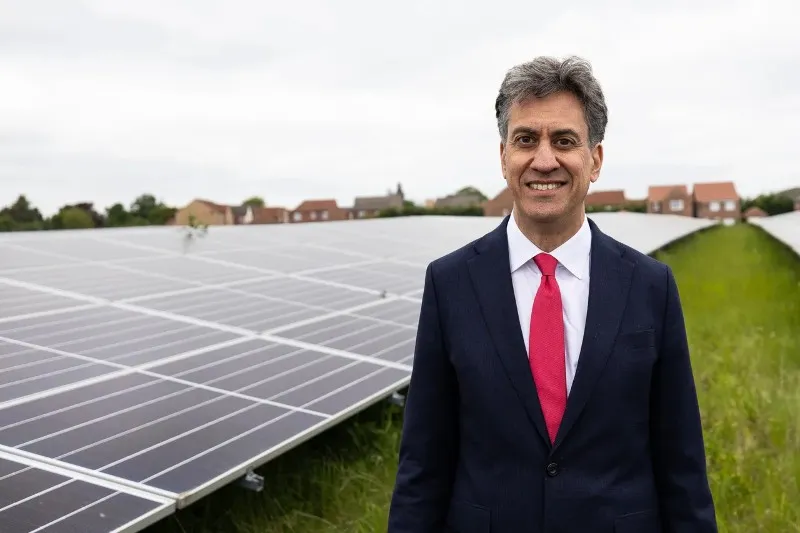
UK Energy Secretary Ed Miliband stated that the conflict in Iran has clearly demonstrated that clean energy is essential to safeguarding national energy security. His remarks came against the backdrop of ongoing geopolitical tensions in the Middle East, which have once again exposed the UK's historical vulnerability to energy supply disruptions. The Iran conflict, which has disrupted shipping routes in the Strait of Hormuz-a critical waterway through which a significant portion of global oil and gas supplies pass-has led to renewed volatility in international energy prices, reminding the UK of the risks of over-reliance on imported fossil fuels. Miliband emphasized that unlike fossil fuels, which are subject to global price fluctuations and geopolitical uncertainties, renewable energy sources such as solar power provide a stable, home-grown energy supply that reduces the country's dependence on energy imports from unstable regions. He noted that the mandate for solar panels in new homes is not just a step toward meeting the UK's net-zero targets, but a pragmatic response to the lessons learned from the Iran conflict: energy security cannot be guaranteed by relying on external supplies, but by building a resilient, domestic clean energy system. By integrating solar power and low-carbon heating into new housing, the UK is laying the groundwork for a more secure energy future, where households can generate their own clean electricity and reduce their exposure to global energy shocks. Miliband added that the simplification of plug-in solar panel rules is a complementary measure, making it easier for existing households to adopt clean energy as well, further strengthening the country's overall energy resilience.