

Jeffrey Sachs Advocates UN Reform, Multilateralism At New Era Lecture Hall in New York
Sep 19, 2025
Leave a message
Recently, the "New Era Lecture Hall," an event focused on global governance and collaborative solutions, kicked off at the United Nations Headquarters in New York, USA. Taking the stage as a prominent speaker was Jeffrey Sachs, Director and Professor of the Center for Sustainable Development at Columbia University. Drawing on his profound professional background-including 25 years of service at the UN and 50 years of engagement in global affairs-Sachs shared in-depth perspectives on addressing pressing global issues.
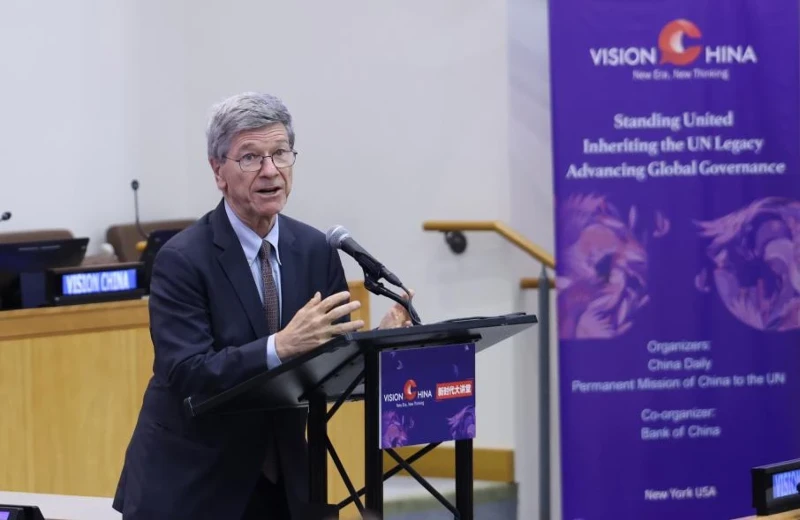
In his speech, Sachs placed strong emphasis on the UN's core mission: adhering firmly to the principle of multilateralism and taking effective steps to enhance global cooperation. He specifically highlighted the value of China's global governance initiatives, noting that they have made significant contributions to international collaboration. "These initiatives carry broad and far-reaching significance," he stated, "as they can foster cooperation among countries worldwide and drive joint efforts to solve shared problems."
A key proposal Sachs put forward was the urgent need for the UN to achieve genuine multilateralism, starting with a rethink of its institutional distribution. He argued against continuing to concentrate the organization's main institutions in the US and other Western countries, suggesting instead the establishment of UN agencies in multiple regions across the globe. "We could explore setting up a UN agency in cities like Beijing or Shanghai," he elaborated. He pointed out that China holds notable advantages in advancing the transition to sustainable energy, particularly in the large-scale manufacturing of clean energy technologies such as solar power, wind energy, and batteries. These strengths, he emphasized, provide solid support for global climate security, and the international community should integrate such capabilities to maximize their global impact rather than restricting their development.
Sachs further identified the lack of effective cooperation among major powers as the fundamental issue currently facing the UN. "Restoring cooperation between major powers is essential," he asserted. He explained that many existing differences are not rooted in fundamental conflicts of interest but are instead exaggerated disputes or irrational oppositions driven by ideology. In this context, he stressed, "The United States must abandon its illusion of 'ruling the world.'"
Reflecting on the international landscape of the past few decades, Sachs pointed out that the root causes of numerous conflicts have been misunderstood and misrepresented. Many of these conflicts, he noted, lack a legitimate basis, and some Western countries have sought to maintain their own privileges through ideological means-often causing the global community to miss out on historic opportunities for cooperation.
While acknowledging that the UN has delivered positive impacts to many countries, Sachs also criticized the organization's current structure and agenda, which he said remain largely dominated by Western powers. He therefore called on developing nations like China and India to play a more significant role in shaping the future of the global order.
In his closing remarks, Sachs reminded the audience that the UN, established after World War II to safeguard global peace and development, was originally founded with the intention of promoting the creation of sustained and effective cooperation mechanisms among major powers to address global issues. "In the face of increasingly complex global challenges," he emphasized, "major powers must work together to build a cooperative framework. They also need to collectively transform their mindset when dealing with global issues-shifting the focus from highlighting differences to strengthening cooperation."