

US Court Rules Biden’s Solar Tariff Suspension Illegal, Paving Way For Retroactive Duties
Sep 02, 2025
Leave a message
Recently, the US Court of International Trade (CIT) ruled that the Biden administration's two-year suspension of import tariffs on solar cells and modules in Southeast Asia is illegal. This ruling means that from June 6, 2022 to June 6, 2024, a large number of low-priced solar products imported from Southeast Asia (most of which are produced in China) will now face retroactive taxation.
The core initiators of this lawsuit are Auxin Solar Inc. and Concept Clean Energy Inc. The two companies argue in their lawsuit that the Biden administration's suspension of tariffs exceeded the scope of presidential authority, and that the Commerce Department's implementation of the tariff suspension was also illegal.
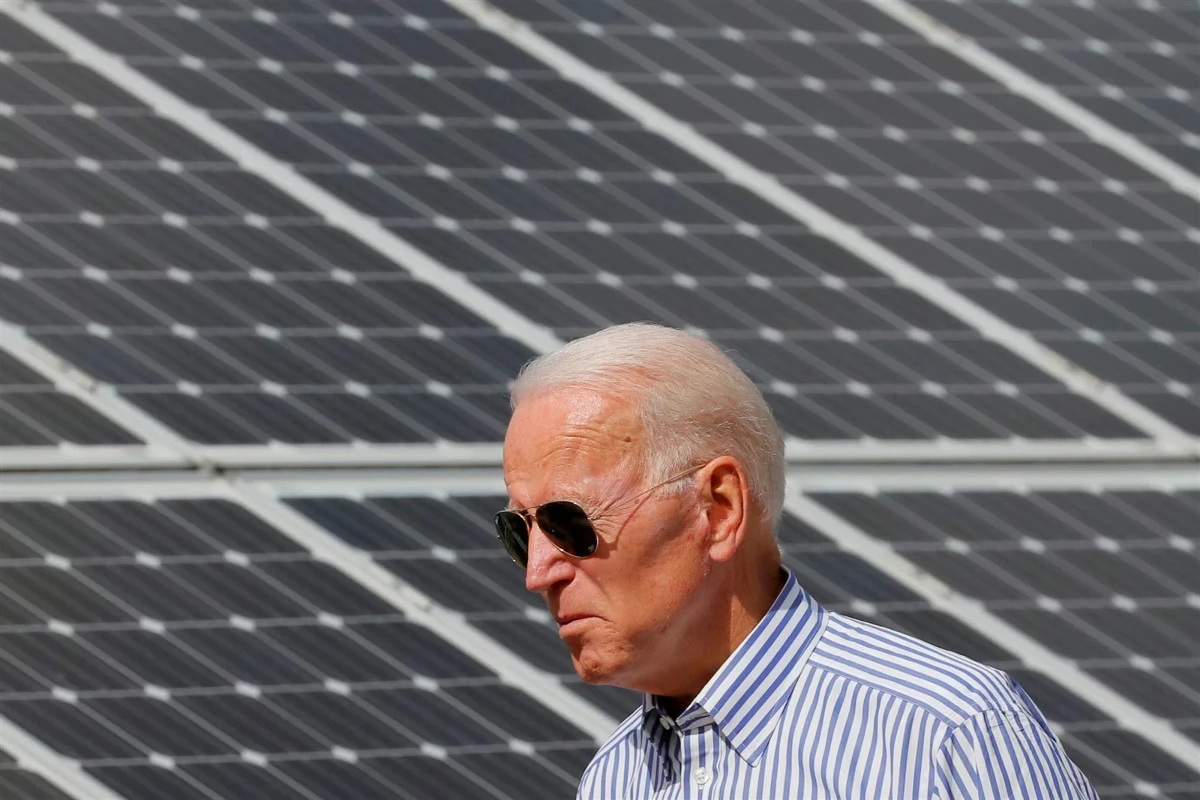
The plaintiff emphasizes that the tariff suspension order unreasonably allows low-priced imported products to enter the US market, causing damage to the local manufacturing industry.
With the court ruling taking effect, the US Customs and Border Protection (CBP) can immediately initiate a retroactive taxation process, imposing tariffs totaling billions of dollars on solar cells and modules imported from Cambodia, Malaysia, Thailand, and Vietnam during the suspension period.
According to the report "Revenue Impact of Traceable Tariffs on US Solar Imports during the 2022-2024 Tariff Suspension Period" released by the Coalition for A Prosperous America this spring, conservative estimates suggest that this retroactive tariff could bring $54 billion in revenue to the US Treasury Department. The report also pointed out that retroactive taxation will provide a fair competition platform for local solar energy producers, alleviating their long-standing unfair competition pressure from imported products related to China. Such products are often subsidized and supported, and pricing is also artificially lowered. Thomas Beline, representing the plaintiffs Auxin Solar Inc. and Concept Clean Energy Inc., told the media, "This is an undisputed victory
In fact, the focus of controversy in this case is on the legality of Federal Government Proclamation 10414. The announcement was issued by the Biden administration, which clarifies the emergency suspension of anti-dumping and countervailing duties on solar cells and modules in four Southeast Asian countries for a period of two years. Although the US government has previously preliminarily determined that Chinese companies are evading existing tariffs through Southeast Asian countries, the original intention of issuing the suspension order is to ensure smooth import channels and assist in the landing of US solar projects. It is worth noting that Auxin Solar Inc., one of the plaintiffs, was the first to initiate an "anti circumvention" lawsuit against solar products in Southeast Asia. During the effective period of the suspension order, the US Department of Commerce has instructed Customs and Border Protection to suspend the collection of relevant tariffs.
Now that the plaintiff has won the lawsuit, it means that the US government must revoke all tariff suspension measures and impose comprehensive retroactive taxation on products imported during the suspension period that have not yet completed tariff settlement. These tariffs may bring huge losses and uncertainties to importers, developers, and utility companies, who have previously used these low-priced equipment for multiple projects, some of which have now been completed. The maximum amount of tariffs retroactively levied this time may reach over 200% of the value of imported products.
Belin said, "For all affected groups of importers, even if calculated under the current tariff system, this tariff amount is extremely considerable." Currently, the defendant and related stakeholders in the case have begun to take measures, one of which is to appeal to the US Federal Circuit Court of Appeals; The second is to apply for a temporary suspension of tariff collection during the appeal period to alleviate short-term financial pressure; The third is to promote the cancellation of retroactive tariff collection through political channels. It is reported that the entities involved in the response include industry associations and leading companies, including the American Clean Energy Association, BYD, Atlas, Oriental Sunrise, Trina Solar, etc.
Belin believes that this ruling has sounded the alarm for the blind pursuit of profit during the trade dispute. He said, "During this period, some companies have been blinded by short-term interests, acted improperly, and pushed product prices to such a low level, which is itself an unwise choice." He further stated that fundamentally, the court's ruling clarifies a principle that the President of the United States has the power to declare a state of emergency in industrial trade, but has no authority to repeal tariff collection regulations that have already taken effect. The decision to issue a temporary suspension order at that time itself had serious problems, and we hope that such situations will not happen again.
At present, the US International Trade Court only releases a brief overview of the judgment, and the complete judgment text containing non confidential information is expected to be officially released in the "Judgment Announcement" section of the court's official website this weekend.