

What Is The Difference Between Solar AC And Normal AC
Jul 20, 2026
Leave a message
What Is the Difference Between Solar AC and Normal AC
Understanding the Difference Between Solar Air Conditioners and Traditional Air Conditioners
With the increasing demand for energy-saving solutions and the continuous rise in electricity costs, more homeowners and businesses are paying attention to more efficient cooling technologies. Among different options, solar air conditioners are becoming an attractive alternative to traditional air conditioning systems.
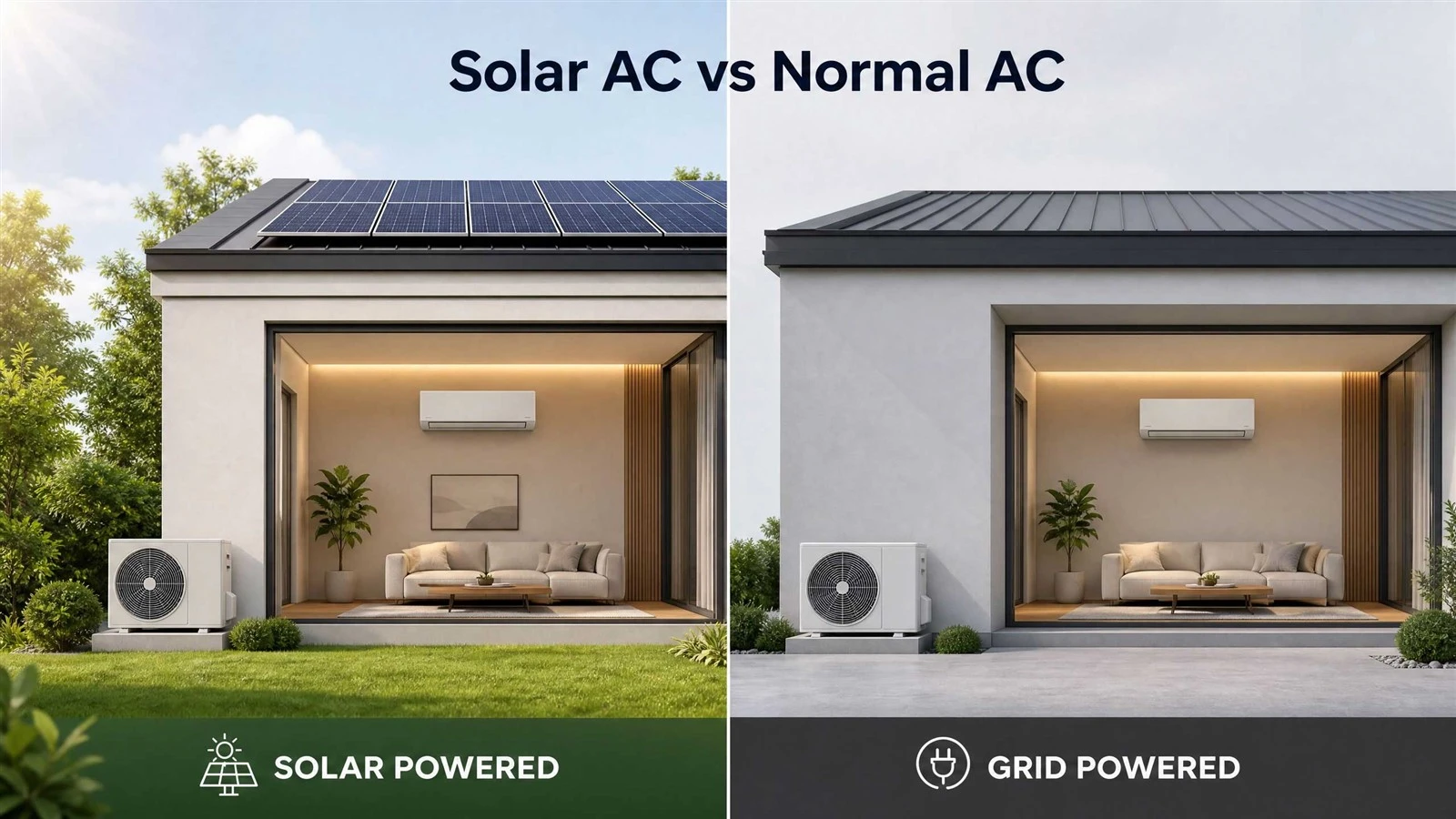
Many people are asking: What is the difference between solar AC and normal AC? Although both systems are designed to provide comfortable indoor cooling, they have significant differences in energy sources, operating costs, efficiency, and application environments.
How Does a Normal AC Work?
A normal air conditioner, also known as a traditional AC system, mainly depends on electricity from the power grid. The compressor, fan, and other cooling components require continuous electrical power to maintain the desired indoor temperature.
Traditional air conditioners have been widely used around the world because of their mature technology and stable cooling performance. However, during hot seasons, air conditioners often need to operate for many hours every day, which can lead to higher electricity consumption and increased energy costs.
For areas where electricity prices are high or power supply is unstable, relying only on grid electricity may create additional operating pressure for users.
How Does a Solar AC Work?
A solar air conditioner uses solar energy as an additional or primary power source to operate the cooling system. Solar panels capture sunlight and convert it into electricity, which can then be used to power the air conditioner.
Compared with traditional AC systems, modern solar AC solutions often combine solar technology with DC inverter compressors. This allows the system to adjust cooling output according to actual demand, improving energy efficiency and reducing unnecessary power consumption.
Some hybrid solar air conditioners can also work with both solar power and grid electricity. This flexible operation mode ensures reliable cooling performance even when sunlight is limited, making them suitable for residential, commercial, and off-grid applications.
Solar AC vs Normal AC: Key Differences in Energy and Cost
The biggest difference between solar AC and normal AC is the way they use energy. A traditional air conditioner relies completely on electricity from the grid, while a solar air conditioner can utilize renewable solar energy to reduce dependence on conventional power sources.
In terms of operating costs, traditional AC systems may result in higher electricity bills because cooling usually requires a large amount of energy, especially in summer. Solar air conditioners can reduce electricity consumption by using free solar power, helping users save energy costs over the long term.
Although the initial investment of a solar AC system may be higher than a conventional air conditioner, the long-term savings from reduced electricity usage make solar cooling solutions increasingly attractive.
Solar AC Provides a More Sustainable Cooling Solution
Another important difference between solar AC and traditional AC is environmental impact. Traditional air conditioning systems increase electricity demand, which may indirectly increase carbon emissions depending on the energy source.
By using renewable solar energy, solar powered air conditioners provide a cleaner cooling option and support global efforts toward energy conservation and sustainable development.
As solar technology continues to improve, solar air conditioners are becoming more efficient, reliable, and accessible for different markets around the world.
Which One Should You Choose: Solar AC or Normal AC?
The choice between a solar AC and a normal AC depends on different application needs. For areas with stable electricity supply and low energy costs, traditional air conditioners can still meet basic cooling requirements.
However, for users who want to reduce electricity bills, improve energy independence, or install cooling systems in areas with limited power access, a solar air conditioner can provide a smarter solution.
Solar AC systems are especially suitable for homes, remote areas, rural projects, commercial buildings, and locations where reducing energy consumption is an important goal.
The Future of Cooling with Solar Energy
With the global transition toward renewable energy, solar-powered cooling technology is expected to play a more important role in the future air conditioning market. More customers are looking for cooling solutions that are not only comfortable but also energy-efficient and environmentally friendly.
Edobo provides reliable hybrid solar air conditioner solutions designed for different cooling requirements, including 9000 BTU, 12000 BTU, 18000 BTU, and 24000 BTU models. By combining solar power technology with efficient cooling systems, Edobo helps customers reduce energy consumption and achieve smarter cooling solutions.
Click here to learn more about our solar air conditioner products and solutions.