|
Function and Introduction
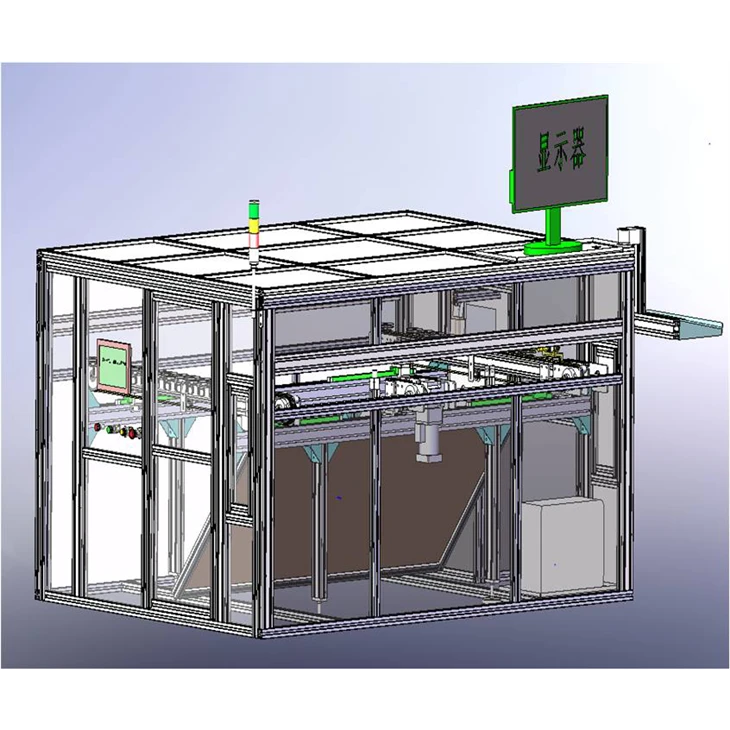
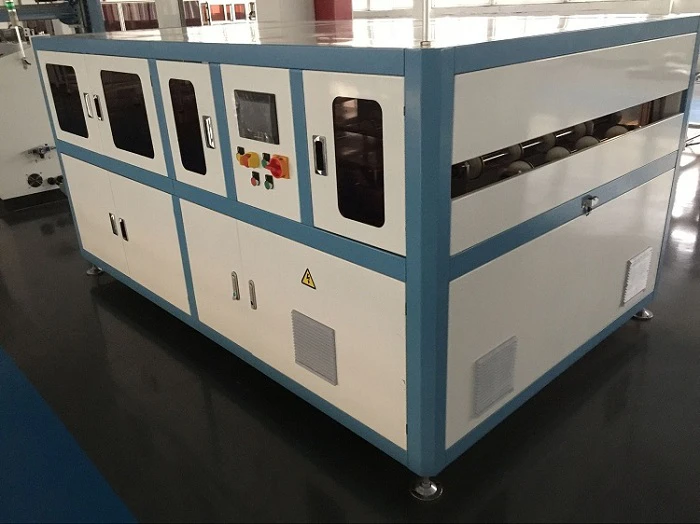
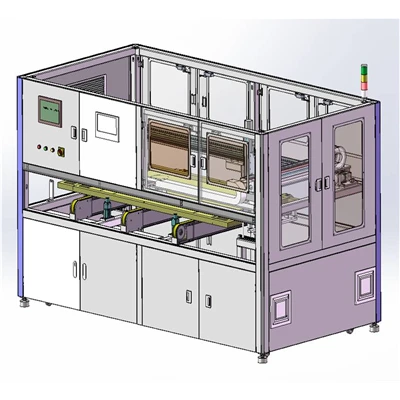
Online EL tester, the transmission height 960mm(can design according to client demand),short come and short go, single camera 1600w/2400w/3200w, light down.
1.After transmission in the last process, send signal.
2.EL tester receive the signal, the secret door open, transmission into the working area, secret door closed.
3. Positing the last action, frequency conversion motor slow down, the component arriving at positing column, the motor stop running.
4.Probe actions(make the top of the probe on the bussing ribbon).
5.The camera automatically takes pictures, the test results are automatically stored in the computer, the probe reset.
6.The secret door open, the motor running component transmission, the component left this area, support component reset.
7.When the main part running, the operator to observe the detected component are in line with requirement.
Main Parameter
Module format:(1580-2000)mm*(800-1000)mm
Cycle time:<33s
Max capacity:>2618/day,
Operator online:1
Rated power(kw):1.02kw,
Pressure(MPa):0.7MPa+0.1 ,
Dimension(LXWXH):2580mmx1900mmx1400mm,
Understanding the Role of the HD EL Tester
The "HD EL Tester" stands for High-Definition Electroluminescence Tester. Electroluminescence (EL) is a phenomenon where a material emits light when an electric current is passed through it. In the context of solar panels, the EL test is a powerful non-destructive method used to detect defects and imperfections within the solar cells after they have been laminated into a module.
The "after Laminator" designation means that this particular EL tester is specifically placed in the production line after the lamination process. This is crucial because the lamination process can sometimes introduce new defects or highlight pre-existing issues.
Why is HD EL Testing Important After Lamination?
Detecting Lamination-Induced Defects: The lamination process involves high heat and pressure, which can sometimes cause microcracks, cell fractures, or other defects in the solar cells. An EL test after lamination can identify these issues.
Verifying Encapsulation Integrity: The EL test can reveal issues with the EVA encapsulant (the bonding material) such as incomplete bonding, air gaps, or delamination, which could lead to performance degradation and premature failure.
Identifying Hidden Defects: The lamination process can often make previously hidden defects more visible, allowing for identification and removal of faulty modules.
Quality Control: The HD EL test is a critical quality control step to ensure that the manufactured panels meet the required performance and reliability standards.
Preventing Costly Issues: Identifying defects at this stage prevents the faulty modules from moving further down the production line and potentially reaching customers. This helps reduce costs by catching errors before they become large issues.
|