



Founded in the early 2000s, Edobo has over 20 years of experience in producing high-quality solar components. The company started out as a small workshop, specializing in the production of photovoltaic cells and solar panels. Since then, it has grown to become one of the leading solar component manufacturers in the region. Edobo's success is attributed to its commitment to excellence, continuous innovation, and a focus on customer satisfaction. We invest a significant amount of resources in the research and development of solar components.
Our Advantages
Advanced Production Line
Our company has expanded its manufacturing facilities to include state-of-the-art production lines and advanced manufacturing technology. This allows Edobo to increase production capacity while maintaining high-quality standards.
Rich Experience
Edobo is a solar module manufacturing company with more than 20 years of experience and has established a state-of-the-art modern factory. The factory covers an area of 60,000 square meters and can achieve large-scale production.
Strict Quality Control
Our factory is equipped with advanced production lines and cutting-edge technology, and the production process is strictly monitored to ensure the quality of each panel.
Broad Sales Market
Our company has achieved impressive sales in the global market, and its products are exported to more than 100 countries and regions around the world. Quality solar panels, solar power systems, inverters, and batteries are highly sought after.


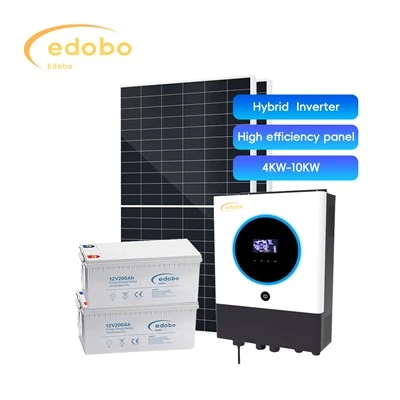

A solar hybrid system is a renewable energy system that uses solar photovoltaic (PV) panels to generate clean energy to power your home. A hybrid solar system intelligently switches between using solar power, battery storage and grid power.
On-Grid System
An on-grid system is also known as a grid-tied system. It is one that works with your local utility’s company e.g Distribution companies. The system generates electricity for your home and sends the excess power generated into the national electric grid for compensation (made possible through feed-in tariffs or net metering) from the distribution company.
Off-Grid System
On the other hand, an off-grid system is a system that is totally independent of the national electric grid. There are houses and communities that are far from the grid and have no hope of being connected in years to come. Individuals in cities who were formerly connected to the grid can also decide to go off-grid.
Hybrid System
Hybrid systems are systems that have two generation sources e.g. a solar-powered system with storage and a generator. It combines the best approaches of both on-grid and off-grid systems. It could be connected to the national electric grid too.
Other Differences
In terms of energy storage, on-grid systems do not need storage; off-grid systems use very large storage, and hybrid systems use a storage size depending on load requirements. In an on-grid solar system, when there’s no power from the national grid, there is a blackout (if there’s no storage). In off-grid and hybrid solar systems, the energy storage (battery) provides backup power when the national grid is down. In terms of cost, off-grid solar systems are the most expensive because of the storage, followed by hybrid solar systems while on-grid solar systems are the least expensive.

Advantages of Hybrid Solar System
Increased Energy Independence
Hybrid solar systems offer greater energy independence, especially in remote areas with limited access to traditional power grids. They provide reliable electricity to communities, businesses, and even individual households without relying solely on non-renewable energy sources.
Energy Storage and Flexibility
Hybrid systems can incorporate energy storage solutions like batteries to store excess electricity during peak generation periods. This stored energy can then be used during low generation periods or when energy demand is high, providing flexibility in power distribution.
Optimal Utilization of Resources
By combining solar with other renewable energy sources, hybrid systems optimize the use of available resources. For instance, during cloudy or low-sunlight periods, wind turbines can continue generating power, ensuring a more stable energy output.
Reduced Grid Dependency
When a hybrid solar system is connected to the traditional power grid, it can feed excess energy back into the grid, reducing the demand for electricity from conventional power plants. This process, known as net metering, can even lead to financial benefits by earning credits or incentives from utility companies
Environmental Benefits
Hybrid solar systems contribute to a greener and more sustainable environment. By relying more on renewable energy sources and less on fossil fuels, these systems help reduce greenhouse gas emissions and combat climate change.
Cost Savings
Though initial installation costs may be higher compared to standalone solar systems, hybrid systems can provide long-term cost savings due to reduced dependency on non-renewable energy sources and potential financial incentives.
Application of Hybrid Solar System

Residential Use
Hybrid Solar Systems are ideal for residential applications, especially in areas with unreliable grid connections or frequent power outages. These systems can provide continuous power supply, even during grid failures, by utilizing stored energy in batteries.
Remote Areas
Hybrid Solar Systems are well-suited for remote locations where grid connections are not available. By integrating energy storage, these systems can provide reliable electricity around the clock, reducing the reliance on diesel generators.


Microgrids
Hybrid Solar Systems can be used to establish microgrids that operate independently or in conjunction with the main grid. These systems help improve energy reliability and stability in communities, industrial sites, or rural areas.
Backup Power
Hybrid Solar Systems can serve as backup power sources during grid outages, ensuring uninterrupted electricity supply for critical loads or emergencies. In regions prone to natural disasters, these systems offer a reliable backup solution.

Components of a Hybrid Solar System
A hybrid solar system uses many interacting components, including:
Solar Panels
Hybrid solar systems use the same PV panels as traditional installations.
Hybrid Inverter
This is a special type of inverter, capable of connecting to both solar panels and battery storage systems.
Battery System
The battery in a hybrid solar system can provide backup power during blackouts. It also allows you to use solar energy at any time, even when your PV modules are not generating power. Your installer may recommend lithium batteries over lead-acid batteries due to their superior efficiency and longer service life.
Energy Management System
The energy management system controls the electricity flows between your solar panels, battery backup system, home appliances, and local power grid. Energy management software is normally included with hybrid inverters.
Working Principle of Hybrid Solar System
A hybrid system is essentially a renewable energy system that utilizes solar panels to generate clean energy to power your household. It all starts with solar panels being exposed to sunlight to collect energy. These panels are able to harness the sun’s energy for their special photovoltaic cells.
Once energy is harnessed by the solar panel, it’s in the form of direct current energy. Since all of our households run on alternating current, a solar inverter is a necessary part of your hybrid energy system that converts that raw direct current into usable alternating current.
When your system is producing more energy than your household is currently using, that excess energy will be sent via the switchboard to your battery. This battery will hold the solar energy until you need it. Most of the time, this will be whenever the sun goes down, and you’re not able to produce solar energy but still need to run your appliances.
This is also helpful when the public grid has a power outage. You’ll still be able to rely on your solar battery to power your household’s electricity needs whenever it cannot harness energy from the sun, such as in the evening hours.
Maintenance Tips for Hybrid Solar System
Photovoltaic Cleaning and Maintenance
As we previously stated, solar panels can only perform at an optimal level if they are clean and free of any object or element that could block the sun’s rays. This includes shade! As far as maintenance is concerned, it serves to remind us that photovoltaic solar panels do not require any special technical maintenance. That’s right. They are extremely reliable and sturdy— and can operate for up to 30 years! All you need to do is ensure an occasional verification of the cables, the output meter, and the inverter. A mere glance at the monitor will alert you to an unexpected drop in production levels.
Thermal Solar Panel Cleaning and Maintenance
The cleaning procedure is similar to that of any other panel type. However, this type of solar installation requires rigorous thermal maintenance based on recommendations outlined by each manufacturer in part. These are specified in the care and maintenance manuals. The thermal maintenance of an installation is carried out by a solar installer once a year, at which time he:
Verifies the water pressure by using the pressure gauge to ensure that it is not less than 1 bar. If the pressure sits below 1 bar, this could jeopardize the circulation of the glycol water and negatively affect the entire solar installation.
Controls the quantity of glycol, which is the antifreeze found in the panels. There must be enough glycol to prevent the panels from freezing in the winter.
Monitors the operation of the installation’s safety devices, such as the mixing valve at the outlet to the domestic hot water tank or the solar safety valve.
Ensures that the installation is perfectly sealed and waterproof. Confirms the absence of fluid leaks on the accessible portions of the system.
Verifies the pump, the expansion tank, and the electrical connections.
All actions performed on the thermal installation must be recorded by the installer in a maintenance notebook and safeguarded so as to ensure precise tracking throughout the service life of the installation.
Hybrid Solar Panel Cleaning and Maintenance
The distinguishing feature of hybrid solar panels is that they combine two systems in one: photovoltaic panels on the front and thermal panels on the back, towards the roof. Hybrid solar panels are cleaned in the exact same way as a photovoltaic or thermal panel, meaning with soft, lukewarm water and a non-abrasive sponge. As far as of the photovoltaic side is concerned, this procedure is identical to that of a classic panel, which consists of verifying the cables, the production housing, and the solar inverter.
Inverter and Housing Maintenance
To begin with, we remind that the solar inverter is an indispensable part of a solar installation which converts direct current output into alternating current. It also comes in a smaller format, called a micro-inverter. Maintaining an inverter is a hassle-free task. Once a year, the air inlets must be cleaned so that the device can cool down properly. The indicator lights and various displays must also be checked at this time. This procedure limits the decreased productivity of the device at the end of its service life. It should be noted that a solar inverter has an estimated service life of about 10 years. In addition to being cleaned and maintained, it will need to be replaced at least once during the service life of the photovoltaic system. Last but not least, we turn our attention to the other connector housings. Their maintenance consists of dusting off and verifying the indicator lights.
Factors to Consider When Choosing a Hybrid Solar System
Energy Consumption
Assess your household's energy consumption patterns to determine the size of the solar system required. Consider past energy bills and peak usage times to estimate the appropriate capacity.
Roof Suitability
Evaluate the orientation and slope of your roof to ensure it receives maximum sunlight exposure. South-facing roofs with minimal shading are ideal for solar panel installations.
Budget and Financing Options
Solar installations can vary significantly in cost. The solar panel price also varies depending on various factors. Some solar panels cost significantly more than others. Explore various financing options, including solar loans and leasing agreements, to find a solution that aligns with your budget.
Solar Panel Efficiency
The efficiency of solar panels is a crucial factor in their performance. High-efficiency panels generate more electricity and require less roof space, making them a practical choice for smaller properties.
Warranty and Maintenance
Choose solar panels from reputable manufacturers that offer reliable warranties and maintenance support to ensure the longevity and efficiency of your system.
Our Factory
Our factory is equipped with advanced production lines and cutting-edge technology to ensure the production of reliable, efficient solar panels. The production process is strictly monitored to ensure the quality of each product.


Our Certificate
We have obtained TUV, CE, CQC, CEC, ISO9001 and other certifications, and product quality is guaranteed.


Ultimate FAQ Guide to Hybrid Solar System
Q: What Is a Hybrid Solar System?
Q: What are the pros of a Hybrid Solar System?
Due to weather events, aging systems and other reasons for grid vulnerability, the fact is that most Americans experience power outages at least once a year—with many experts saying that experience will only become more common. That leaves many people susceptible to going without power for hours or longer, which is never fun and is often costly (due to spoiled food) or even dangerous for certain health conditions. That’s why the most compelling reason to invest in a hybrid solar system is that it essentially guarantees that you can keep a continuous supply of power—even if the rest of the grid is down—by pulling from your own battery. This makes hybrid solar systems especially attractive to residents of areas that are prone to losing power, especially if those episodes are for longer periods of time.
You Can Take Full Advantage of a Renewable Resource
A hybrid solar system allows you to get the most energy possible out of your solar panels. By routing the energy generated through a hybrid inverter and into your own battery before kicking back the excess to the grid, you can feel confident that you are utilizing clean, renewable energy as much as possible.
Q: Is a hybrid solar system right for me?
Q: Do I need a professional to install a hybrid solar system?
Q: How long do hybrid solar systems last?
Q: What is the disadvantage of a hybrid solar system?
Q: Why is a hybrid PV system more costly than an on-grid solar system?
Q: How do hybrid systems provide power when there is no solar energy?
Q: Can I run AC on a hybrid solar system?
Q: What is the difference between a solar system and a hybrid solar system?
Q: What are the benefits of a hybrid solar system?
Q: How does a hybrid solar system work?
● Converts the electricity output from the solar panels or battery system from direct current (DC) electricity to the alternating current (AC) electricity needed to power your home.
● Manages your system’s solar battery charging cycle.
● Synchronizes with the local power grid voltage to operate in grid-tied mode.
● You can use your hybrid system’s battery even when connected to the grid. For example, if your battery charges during the day, you can use that energy at night instead of paying for grid power.
There are two ways to add energy storage if you have a grid-tied solar system with a traditional inverter. You can upgrade to a hybrid inverter capable of handling batteries, or you can leave the existing inverter in place and install a separate battery inverter.
Q: How does Hybrid Solar System save electricity bills?
Q: Can the Hybrid Solar System be used as a backup power source?
Q: Is an off-grid or hybrid solar system better?
Q: What is the difference between a traditional solar system and a hybrid solar system?
Q: What is a hybrid solar system and how do they work?
A hybrid solar system will typically have one or more controllers that allow you to send the excess solar energy coming from your panels either to your battery storage or to the grid. It's also possible to set your system to charge your battery first and send power to the grid only when it's full. Using the energy from your battery might also require additional components like a charger for your electric vehicle, if you have one, and an inverter to convert the direct current in the battery to household alternating current. This is all in addition to the grid tie-in hardware most systems have. It is also possible to forgo the grid connection entirely and have a completely off-grid panel and battery system.
Q: Is a hybrid solar system right for me?
Q: What is Needed for a Hybrid Solar System?
Q: What are the advantages of a Hybrid Solar System?
A hybrid solar system with storage batteries connected to the inverter ensures a continuous power supply. In case your area experiences a blackout, the battery will function as an inverter and provide backup electricity.
Low Maintenance
A hybrid inverter does not have to require any fuel to operate. Hence, it is pretty low on maintenance. You don’t have to spend as much time, resources, and effort in maintaining it as you did on conventional inverters.
Renewable Resource Utilization
Batteries connected to a hybrid system ensure optimal use of solar energy when the weather is bright and sunny. Thus, the battery can store maximum energy on sunny days and use it in the form of electricity when the weather is overcast or in case of outages.
Q: How often do I need to maintain my solar panel system?
As one of the most professional hybrid solar system suppliers in China, we're featured by quality products and competitive price. Please rest assured to buy discount hybrid solar system from our factory.
PV Power System, PV Energy System, Hybrid Solar System