



Founded in the early 2000s, Edobo has over 20 years of experience in producing high-quality solar components. The company started out as a small workshop, specializing in the production of photovoltaic cells and solar panels. Since then, it has grown to become one of the leading solar component manufacturers in the region. Edobo's success is attributed to its commitment to excellence, continuous innovation, and a focus on customer satisfaction. We invest a significant amount of resources in the research and development of solar components.
Our Advantages
Advanced Production Line
Our company has expanded its manufacturing facilities to include state-of-the-art production lines and advanced manufacturing technology. This allows Edobo to increase production capacity while maintaining high-quality standards.
Rich Experience
Edobo is a solar module manufacturing company with more than 20 years of experience and has established a state-of-the-art modern factory. The factory covers an area of 60,000 square meters and can achieve large-scale production.
Strict Quality Control
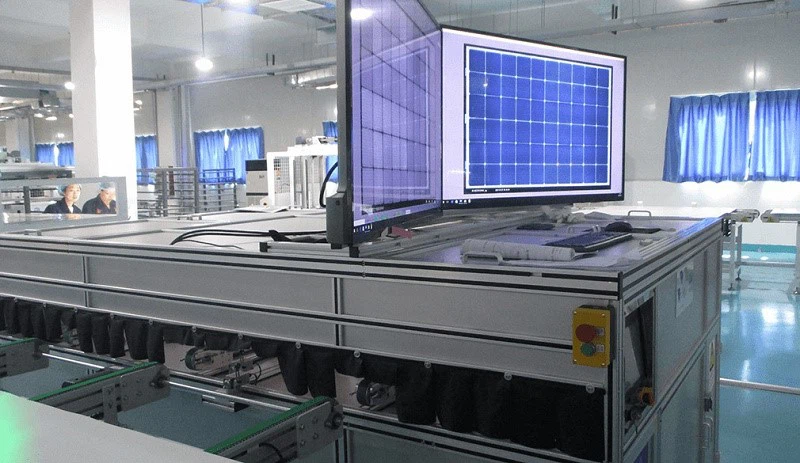
Our factory is equipped with advanced production lines and cutting-edge technology, and the production process is strictly monitored to ensure the quality of each panel.
Broad Sales Market
Our company has achieved impressive sales in the global market, and its products are exported to more than 100 countries and regions around the world. Quality solar panels, solar power systems, inverters, and batteries are highly sought after.


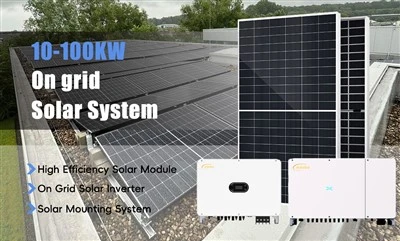

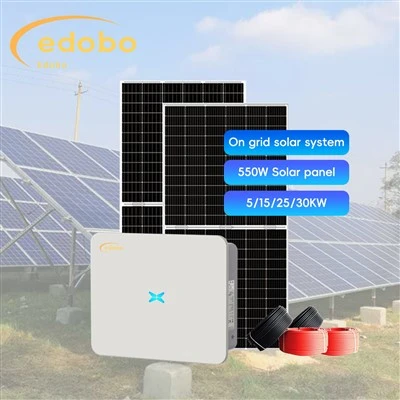
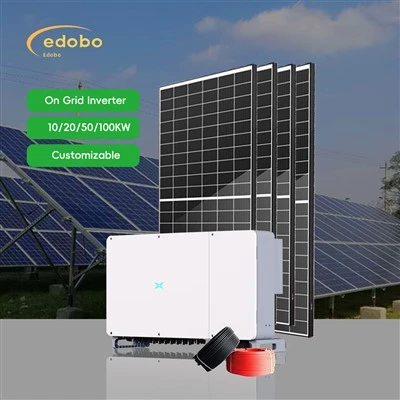

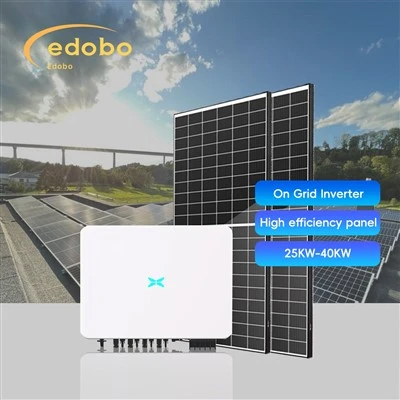
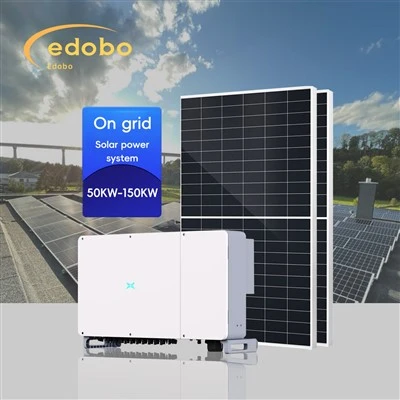


An on-grid solar system particularly refers to the one connected to the utility grid. Electricity generated by solar panels is routed to the grid from where it is supplied to various appliances. On-grid solar systems need a grid connection to work and in case of a power outage, this solar system does not work. Due to this, it is also known as a grid-tied system.
Advantages of On Grid Solar System
Energy Cost Savings
One of the primary advantages of a grid solar system is the potential for significant energy cost savings. By harnessing solar energy, users can generate their electricity and reduce reliance on traditional energy sources that often come with increasing prices. With a grid solar system, excess power produced during sunny periods is fed back into the grid, resulting in a net metering system. This credits the user’s account with the excess electricity, which can be used during times when solar production is lower, such as at night or on cloudy days. Ultimately, this reduces the overall energy bill and provides long-term financial benefits.
Environmental Impact
Another major advantage of a grid solar system is its positive impact on the environment. Solar power is a clean and renewable energy source, producing no greenhouse gas emissions that contribute to climate change. As fossil fuel consumption and carbon emissions continue to rise, transitioning to solar energy is essential in mitigating the environmental damage caused by traditional electricity generation methods. By installing a grid solar system, individuals and businesses can actively contribute to a sustainable future by reducing their carbon footprint and promoting a cleaner environment.
Reliability and Energy Independence
Grid solar systems offer a reliable source of electricity that is less susceptible to power outages. Rather than solely relying on the electric grid, which can be prone to disruptions, grid solar systems empower users with energy independence. With net metering, excess electricity can be stored by the utility company and used during outages, acting as a backup power source. Moreover, in remote areas where connecting to the main power grid is expensive or impossible, a grid solar system provides a reliable and cost-effective solution for accessing electricity.
Reduced Strain on the Grid
As the demand for electricity continues to grow worldwide, the strain on the power grid increases. However, grid solar systems help alleviate this strain by decentralizing energy production. By generating electricity at the point of consumption, solar power reduces transmission and distribution losses that occur during long-distance electricity transportation. Consequently, grid solar systems contribute to a more efficient use of electricity, reducing the strain on the grid and minimizing the need for costly infrastructure expansion.
Comparing Off-Grid and On-Grid Solar Energy Systems
Accessibility to Electricity
A grid-tied solar system, being connected to your supply grid, ensures constant access to electricity. It absorbs and converts solar energy directly on sunny days, and during cloudy periods, it automatically switches back to your supply grid. An off-grid system’s electricity access relies solely on two sources: sunlight and the energy stored in your battery bank. In cases of inadequate sunlight, you have only the stored energy in your battery bank to power your home.
01
Handling of Excess Energy
When grid-tied systems generate more energy than required, the surplus energy is sent back to the supply grid, earning electricity credits. This process, known as net metering, is mandatory in most states. In contrast, off-grid systems store any extra energy directly in the batteries, which can be utilized during cloudy days or when the sun isn’t enough to power the panels.
02
Power Outage
Grid-tied systems have a major downside: during power outages with no sunlight, you’ll be devoid of electricity unless you have a battery bank or generator. Off-grid systems, operating independently of the grid, remain unaffected by grid power outages.
03
Electricity Bills
Even with a grid-tied system, minimal charges such as a service fee for connecting your solar system to the grid and demand charges for peak usage periods will appear on your electricity bill. With off-grid systems, being entirely self-reliant, you can forget about electricity charges and bills altogether.
04
Application of On Grid Solar System
01
Residential Use
Homeowners can install On Grid Solar Systems to generate clean energy for their homes. Any excess electricity produced can be fed back into the grid in exchange for credits or payments.

02
Commercial Use
Businesses can utilize On Grid Solar Systems to reduce their electricity bills and carbon footprint. By generating their own electricity during daylight hours, businesses can lower operational costs.
03
Industrial Applications
Industries can benefit from On Grid Solar Systems by offsetting a portion of their energy consumption with solar power. This can reduce reliance on the grid and stabilize energy costs.

04
Net Metering
Through net metering programs, users can receive credits for the excess energy generated by their On Grid Solar Systems. This encourages energy efficiency and promotes the adoption of renewable energy sources.
On Grid System Components
Alternating Current (AC) Distribution box
This box connects the solar inverter to the grid supply.
Array Junction Box
Multiple solar panels in parallel connection are connected with an array junction box. The capacity of the solar system determines the size of the array junction box. Also known as DC Distribution Box it also has surge protection devices along with other protection devices to prevent any electrical hazard.
Bidirectional Meter
With an on-grid solar system, a bidirectional solar system is mandatory as it ensures a complete record of imported and exported electricity to and from the utility grid.
Direct Current (DC) Cables
The energy produced by solar panels is transferred through these cables; thus, they are designed to withstand extreme weather conditions and varying temperatures (high and low) along with rains and storms. They need to be sturdy to last outdoors.
Earthling Components and Lightning Arrestors
These devices are paired together to protect the solar system from lightning and thunder. Solar panels mounted on roofs are susceptible to getting hit by lightning or thunder which may result in sudden current or voltage surges. This is harmful to the system as well as your household devices and other loads connected to the utility grid.
Mounting Structures
What is on grid solar system without mounts to hold up solar panels? Made from aluminum or Galvanized iron, these mounting modules help in mounting your solar panels at a certain degree for maximum sunlight exposure. The alignment and inclination of solar panels and mounting modules depend on the type of roof type.
Solar Grid Inverter
It is an essential component and its inbuilt charge controller regulates the power supply from solar panels. Different types of inverters used for solar systems are central, string, and micro inverters serving the purpose of converting DC to AC.
Solar Photovoltaic (PV) Array
They are essential for the absorption and conversion of sunlight into electrical energy. With a set of efficient solar panels, good amounts of solar energy are produced to meet the energy requirements of your household. Solar panels are of mainly 3 types, monocrystalline, polycrystalline, and thin-film (amorphous). Warranty, price, and efficiency differ in different types of solar panels but a minimum of 25 years warranty.
Working Principle of On Grid Solar System
By far, grid-connected or grid-connected solar systems are the most common and widely used systems for homes and businesses. These systems do not require batteries, use ordinary solar inverters, and are connected to the public grid. Any excess solar energy you generate will be exported to the grid, and you will usually get a feed-in tariff (FiT) or a credit line for the energy you export.
Unlike hybrid power systems, grid-connected solar systems cannot operate or generate electricity during power outages due to safety reasons. Because power outages usually occur when the grid is damaged; if the solar inverter is still supplying power to the damaged grid, it will endanger the safety of the person repairing the grid fault. Most hybrid solar systems with batteries can be automatically isolated from the grid (called islands) and continue to provide some power during power outages.
How to Maintain Solar Panels of the On Grid Solar System?
Keep solar panels out of shade as energy production becomes inefficient when they are kept from absorbing any sunlight.
Keep an eye on the solar panels and make sure the inverters are flashing green lights. If they are not flashing, you are losing money by no longer compensating for your electricity use.
Document the day-to-day performance to improve solar panel maintenance. It is important to write down how much energy has been produced at a consistent time every day and make special note of dates where it is very cloudy. Some of the results will be inconsistent. (Your manufacturer would be able to provide you with the best monitoring system for your solar panels.)
Monitoring systems help you see how much you are benefiting the environment and how much CO2 you are emitting into the atmosphere. They can also help you know how much you could benefit from the feed-in tariff scheme.
You can also see information about your solar panels servicing on a wall-mounted display when you are at home.
If you have no time in cleaning solar panels, you can install automated cleaners that work like sprinkler systems or even schedule appointments with solar panel cleaning companies.
Luckily, because solar panels have no moving parts that could be affected by rust or break down, solar power maintenance may not be needed.
Questions to Ask Before Choosing an On Grid Solar System
Is My House Suitable for On-Grid Solar Panels?
Evaluating your roof’s available space and structural stability is crucial before purchasing panels. Ensure that your roof is stable, undamaged, and has enough space to accommodate the panels. The available space should exclude vents, eaves, or other obstructions. Also, examine your roof for long durations of time to see if surrounding trees and buildings cast shadows, which can hamper the efficiency of your solar panels.
How Much On-Grid Solar Power Do I Need for My House?
On-grid solar power is a great way to save money and reduce your carbon footprint. But, on-grid solar works only when the grid is up – yes, you cannot use the power from on-grid solar panels when the grid is down. When the grid is up, appliances will continue to get power from your panels and the grid (if required). Therefore, to calculate the on-grid solar power suitable for your home, you'll need to consider three things:
The sanctioned load for your home. If you have 7KW of authorized load, make sure to choose a system that is less than or equal to this number
The amount of money you are willing to invest
The estimated savings on the electricity bill that you're looking for with an on-grid system.
How Many Solar Panels Do I Need?
Once you have determined your solar energy requirement and your home's suitability for solar panels, you should calculate the number of panels. You can use an online tool that provides a free estimate of your optimal solar system size per your home’s location and electricity bill. Based on your average monthly electricity bill, the Estimator will help you calculate the following:
Size of your home solar panel system
Estimated savings over the next 25 years
Approximate cost of the system, including installation
New electricity bill amount (approximate)
Time required to recover an investment
Which is the Best Solar Panel Inverter?
A solar panel is as good as its inverter. String and microinverters are the most common solar panel inverters available to homeowners today. A string inverter performs as well as the solar panel’s least-efficient panel. So, if one panel fails, the entire solar panel system fails. It is not the case with microinverters—if one panel stops functioning, other panels continue performing to their full potential. This is because microinverter systems do not have a single point of failure.
Our Factory
Our factory is equipped with advanced production lines and cutting-edge technology to ensure the production of reliable, efficient solar panels. The production process is strictly monitored to ensure the quality of each product.


Our Certificate
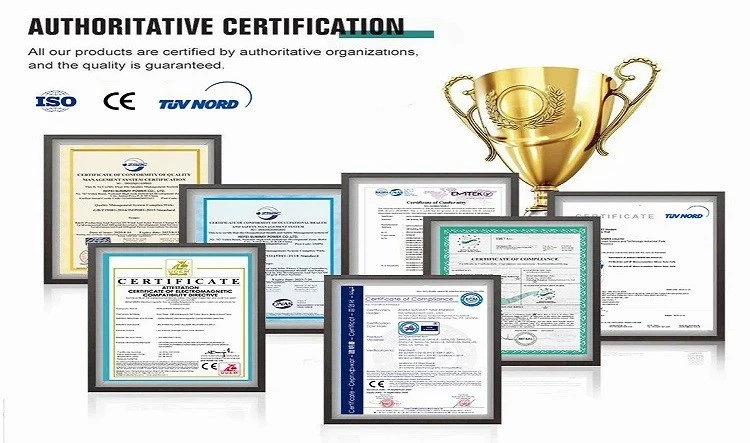
We have obtained TUV, CE, CQC, CEC, ISO9001 and other certifications, and product quality is guaranteed.


Ultimate FAQ Guide to On Grid Solar System
Q: What is an on grid solar system?
Q: Which is better off-grid or on grid solar system?
Q: Why is on grid system best?
Q: What is the difference between on grid and hybrid solar system?
Q: What is On Grid System Working?
Q: What is the difference between On-grid and off-grid solar power?
Q: What are the advantages of On Grid Solar System?
With net-meter in place, the consumer has to pay only for the surplus electricity he consumes, ensuring the bill generated every month is reduced drastically. Many of our customers have been able to reduce their monthly bills by 90%.
● Easy maintenance
The elimination of batteries in the on-grid system makes maintenance quite easy. It also eliminates the cost of upkeep of the batteries
● Synchronize with other sources of power
These systems can also synchronize with a diesel generator on site. This is important in case grid power is not available.
● Better ROI
Cost of a On-grid solar system is lower than other types of solar systems because there are no batteries. It also generates the highest amount of power compared to other types of solar systems. The minimal maintenance and reduction in monthly power bills ensure the customer gets an ROI of 25 – 30%.
With these advantages, an on-grid system is best suited for a customer with stable grid power and minimal power cuts. Other than homes, even educational institutions, industrial units, commercial establishments install an on-grid system as the system can synchronize with diesel generators to provide uninterrupted power.
Q: What are the environmental benefits of grid solar systems?
Q: Can a grid solar system save me money?
Q: Can grid solar systems be used in areas with frequent power outages?
Q: How to choosing the right solar system?
Grid-tied systems, being more cost-effective, help reduce your monthly electricity bills and potentially generate profit through credits. Off-grid systems, despite their higher upfront costs due to the additional equipment like battery banks, could be viable depending on your circumstances.
Location
Grid-tied systems seamlessly fit into urban settings with easy power line access. If your location is remote from the power grid, an off-grid system would be more suitable.
Energy Needs
For larger households or buildings with high power consumption, grid-tied systems offer a reliable backup option. For smaller homes or areas prone to constant power outages, off-grid systems offer the benefit of 24/7 power storage.
Your specific needs ultimately dictate whether a grid-tied or off-grid system is best for you. If budget and easy grid access are your priority, grid-tied systems could be the right choice. However, if you desire total independence from your local utility supply, off-grid systems can deliver consistent power, making the substantial investment worthwhile.
Q: How does an on-grid solar system for home work?
Q: What are the Components of a Grid-Connected Solar System
PV Modules/Panels
Solar panels are the key working component of a solar plant. Each solar panel comprises photovoltaic cells (PV cells) placed between semiconducting materials (like silicon). A current field is generated when photons in the sunlight fall on this material – a process called the photoelectric effect. This results in the generation of direct current or DC electricity.
Bi-Directional Inverter
The direct current of electricity passes through the inverter and comes out as alternating current (AC). Bi-directional inverters also work to stabilise the output voltage. If you choose to buy a battery bank, this type of inverter will facilitate AC to DC conversion for battery charging.
AC Breaker Panel with Fuses
This type of panel provides a single platform for not only the domestic supply of electricity but also for inverter and filter connections.
Charge Controller
It prevents overcharging of the battery and helps prolong the lifespan of your PV system.
Electric Meters
The purpose of electric meters is to bill and quantify the energy generated and used. Two meters are required in the working of a PV generator.
Safety Switches and Cabling
Safety switches (isolation switching and control) are required to disconnect both the AC side and DC side of the bi-directional inverter during testing and maintenance. Also, cabling is used to connect the different solar components together.
Electricity Grid
On-grid solar systems are connected to the utility grid for the two-way flow of electricity between the grid and your solar plant under net metering.
Q: How does solar power work on the grid?
Q: How to clean the solar panels of On Grid Solar System?
● How to clean solar panels has never gotten easier! Clean solar panels when they are moist or wet so any dirt so residue that is stuck on them can be wiped off easily.
● Never use an abrasive sponge or soap for your solar panel cleaning as you may scratch the glass. The best way to clean solar panels by using a soft rag or biodegradable soap.
● It is important not to use harsh materials when cleaning solar panels as they could cause damage, and solar panels are costly to repair.
● If you clean often, you might be able to just run a hose along the panels to remove any dirt. Fewer calls on solar panel maintenance.
● For your safety and the safety of others around you, use a long handled wiper to clean the panels while you are standing on the ground.
● If you must get on the roof, take proper care as once you begin cleaning, the roof becomes slippery and you could slide off when you get down, so use safety ropes or a harness for support.
● Always watch out for dirt on the solar panels to make sure it doesn’t build up since they can absorb sunlight better when they are free of dirt.
● Many people question, do solar panels need cleaning? – the answer is yes. Depending on the type of panel you have, you might be weekly or monthly in cleaning solar panels. Your solar panel manufacturer should be able to advise you on this for solar panel cleaning.
Taking care of your solar panels is crucial to ensure their longevity and efficiency, but sometimes cleaning and maintenance won’t be enough to keep them running smoothly. If your solar panels are old, damaged or simply not working as well as they used to, it may be time to consider replacing them with new ones.
Q: What are the differences between on-grid and off-grid solar systems?
Accessibility to Grid Power
On-grid solar systems can generate electricity from the sun as well as draw power from the public grid. Off-grid systems have the potential to run out of power during prolonged periods of bad weather. On-grid homes can always use the utility company's electricity when it is needed.
Power Generation in Excess of Demand
On-grid solutions may pay dividends when the system generates more electricity than you demand. If your utility company allows net metering, sending excess energy back to the grid can earn you money. You will typically receive credits on your electric account for the energy you contribute back to the grid. In the same way, excess electricity in an off-grid solar system is stored in the battery bank and can be preserved for later use.
Grid Power Outage
One of the most significant disadvantages of an on-grid system is that you will not have access to electricity if there is no sunlight and the grid fails, resulting in a power outage. Unless you opt to purchase a battery bank or generator. Off-grid solar systems provide peace of mind to homeowners who reside in areas prone to power disruptions or harsh weather. Even if the power system fails, they can continue to use electricity.
Electricity Charges
Because it is tied to your local utility grid, an on-grid system will still result in minimal expenses on your electricity bill. One of the charges is a service fee for connecting your solar system to the grid, as well as a demand tax for the higher electric rate you pay for power used during peak demand periods, or when your home uses the most electricity. One advantage of off-grid solar systems is that you avoid paying electric bills if you generate your own power. Electric bill elimination can result in significant financial savings for homeowners, especially in areas with high electricity expenses. Every year, producing your own electricity can save you hundreds or even thousands of dollars.
Total Cost
The on-grid approach is easy and economical to implement. It enables residential and commercial clients to profit passively from extra energy generated by the systems. According to an Economic Times study, private, commercial, or industrial buildings can profit from 'Accelerated Depreciation profit' by installing PV rooftop systems, which are presently depreciating at a pace of 80 percent in a year. While an off-grid option does not require you to pay electric bills, it does require a significant upfront investment. Fortunately, there are a variety of government programs and tax credits available to help with the initial costs.
Q: Do solar panels work at night?
Q: How much energy will my solar system produce?
Q: What is the maximum amount of energy a solar panel can produce?
Q: Is an on-grid solar system suitable for large commercial properties?
As one of the most professional on grid solar system suppliers in China, we're featured by quality products and competitive price. Please rest assured to buy discount on grid solar system from our factory.
Solar Electric System, On Grid Solar Panel System, Solar Energy System